





Security guards and related security service occupations
Career Overview
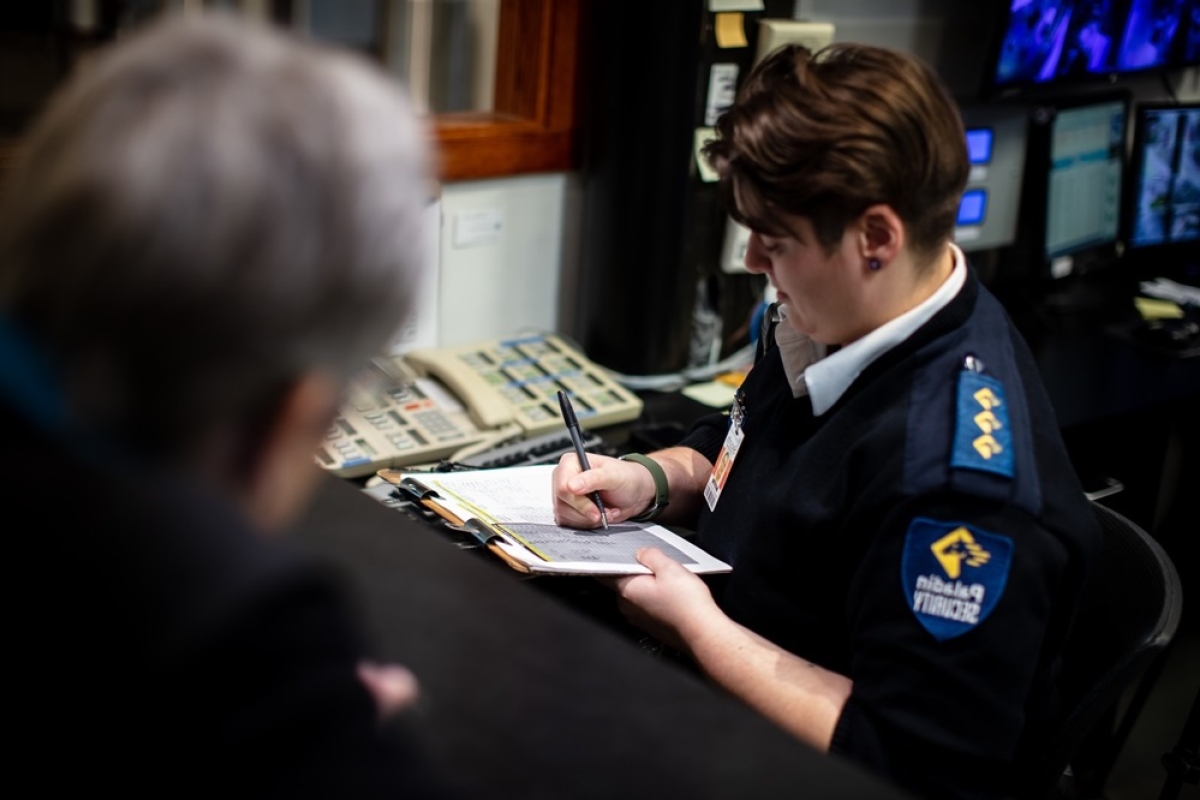
Security guards and related security service workers protect property against theft and vandalism, control access to establishments, conduct private investigations for clients or employers, and maintain order and enforce regulations at public events.
People in these occupations work for organizations throughout the private and public sectors, including security agencies, retail stores, transportation facilities, cultural establishments, residential complexes, educational, financial and health institutions, and industrial establishments. They may be self employed.
Job Titles
Duties
Security guards:
- Control access to establishments
- Operate security control-room equipment
- Patrol assigned areas to guard against theft, vandalism and fire
- Enforce regulations to maintain order and resolve conflicts
- Monitor on-site activities
- Ensure safety and emergency procedures are followed
- Issue passes and direct visitors to appropriate areas
- Check age identification of patrons
Screening officers:
- Inspect and screen luggage or cargo by hand or using equipment
- Perform searches of passengers with tools or by hand
- Monitor and screen passengers through screening checkpoints
Armoured car guards:
- Drive and guard armoured trucks
- Pick up and deliver cash and valuables to banks, automated teller machines and retail stores
Corporate security officers:
- Investigate unlawful acts of employees or patrons of establishments
- Recommend security systems such as electronic detection and access devices
Private investigators:
- Conduct investigations to locate missing persons
- Obtain information for use in civil and criminal litigation matters or for other purposes
- May also conduct polygraph tests (integrity surveys) for clients
Retail loss prevention officers:
- Prevent and detect shoplifting and theft in retail stores
Earnings
Earnings is income that workers receive in exchange for their labour. Depending on the type of employment, earnings can be in the form of wages (hourly), salaries (fixed monthly or annual) or self-employed earnings.
Work Environment
# Workers Employed
13,345% Employed Full Time
47%Most security guards work full time 40 hours per week; however, some workers are only employed part of the year since many job opportunities are seasonal.
Many of the facilities that security guards monitor require supervision 24 hours a day year-round, so workers are often required to work shifts that include evenings, nights, weekends and holidays.
Security guards who watch site activity via security cameras spend a large portion of their day looking at monitors, which may result in eye strain and cause fatigue. They may also work alone.
Some workers may have to travel when monitoring multiple or large sites, guarding items in transit or working in the transportation industry.
Security guards take leadership roles in emergency situations and may have to handle hostile people, which can create a stressful work environment.
Career Pathways
Experienced security guards may move into supervisory positions in the occupation or into corporate security management. Supervisory courses are available to those who want to advance their career.
With additional training and education, security guards may move into law enforcement careers. For example, they may become police officers, corrections officers or sheriffs.
Commissionaires have an established system for moving up, with four levels of supervisor positions and three levels of management positions.
Occupational Interests
It’s important to understand what kinds of occupations align with your interests.
For more about occupational interests visit Skills for the Future Workforce > Characteristics.
Here are the top occupational interest(s) for this career profile:



Education, Training and Skills
All security companies and their employees must be licensed under the Security Services Act. Workers in this group must complete the Basic Security Training (BST) course through the Justice Institute of British Columbia (JIBC), with a final exam grade of 70 per cent or higher.
Training requirements beyond BST vary depending on where security guards work and may include:
- Firearms training for armoured car guards
- Gaming security officer training program offered by JIBC for casino/gaming security guards
- Specific courses and training for commissionaires
Other potential requirements:
- In B.C., security guards do not need a secondary (high) school certificate, but it is preferred
- A college diploma in law and security or police technology may be required
- Canadian Air Transport Security Authority (CATSA) certification is required for screening officers
- Security guards carrying firearms must have a licence
- Armoured car drivers require a valid Possession and Acquisition Licence (PAL) for both restricted and non-restricted firearms
- Corporate security officers may require experience as a police officer
- Private investigators must have a provincial licence
The Security Services Act requires bouncers, armoured car personnel, in-house security guards, bodyguards and members of the Corps of Commissionaires to be licensed and undergo a criminal background check. Other requirements may include:
- Level one industry first aid
- A valid driver's licence
- A clean criminal record
- Basic writing and speaking skills
- Basic computer skills
- Advanced courses in investigation, writing, interviewing, decision-making and ethics
Those who are certified for an occupation by a regulator elsewhere in Canada can apply for the same certification from the regulator in B.C. under the terms of the Canadian Free Trade Agreement (CFTA). Security Programs Division (SPD) regulates B.C.’s security industry and determines if out-of-province candidates can challenge B.C.’s Basic Security Training assessment.
For those who trained outside of Canada and never received certification from any Canadian jurisdiction, a full assessment is likely needed. Most occupational regulators have a process for assessment and recognize internationally trained applicants.
Contact the Ministry of Public Safety and Solicitor General: Security Services for details on how to apply for certification in B.C.
For information about labour mobility in Canada, visit www.workersmobility.ca.
View a list of Professional Regulatory Authorities in B.C.
Education programs in B.C.

Top Skills
Every job calls for a certain set of skills. Knowing those skills is the first step in finding a good career fit.
Here, you will find the 10 most relevant workplace skills. Some are more important to achieving success in a certain career than others. These skills may come naturally to you or you may need to gain them through education, training and experience.
See the list of work-related skills below, ranked in order of importance for this career. Check out the list and see if this career matches your skills—take that first step!

Talking to others to share information effectively.

Using logic and reasoning to identify the strengths and weaknesses of alternative solutions, conclusions or approaches to problems.

Giving full attention to what other people are saying, taking time to understand the points being made, asking questions as appropriate, and not interrupting at inappropriate times.

Keeping track of and assessing your performance, other individuals, or organizations to make improvements or take corrective action.

Understanding written sentences and paragraphs in work-related documents.

Considering the relative costs and benefits of potential actions to choose the most appropriate one.

Communicating effectively in writing as appropriate for the needs of the audience.

Being able to solve novel, ill-defined problems in complex, real-world settings.

Being aware of others’ reactions and understanding why they react as they do.

Adjusting actions in relation to others' actions.
Labour Market Statistics
Discover data, facts and information that have been gathered and analyzed. Learn about the characteristics of the economy and labour market in B.C.
Employment
Find out about employment types and trends by region and industry.
Employment
13,345Employment by Region

| Region | Employment | % Employment of this Occupation |
|---|---|---|
| Cariboo | 355 | 2.7% |
| Kootenay | 195 | 1.5% |
| Mainland/Southwest | 9,215 | 69.1% |
| North Coast and Nechako | 290 | 2.2% |
| Northeast | 150 | 1.1% |
| Thompson-Okanagan | 1,190 | 8.9% |
| Vancouver Island/Coast | 1,955 | 14.6% |
Labour Market Outlook
The B.C. Labour Market Outlook is a 10-year forecast of the expected supply and demand for labour in the province. It’s usually updated every year. The purpose is to provide British Columbians with the knowledge to make informed decisions on careers, skills training, education and hiring.
Forecasted Job Openings (2025-2035)
3,980Forecasted Job Openings
Forecasted Employment Growth Rate
Composition of Job Openings
Job Openings by Region (2025-2035)
| Region | Job Openings | Avg. Annual Employment Growth |
|---|---|---|
| Cariboo | 80 | 0.1% |
| Kootenay | 40 | -0.3% |
| Mainland/Southwest | 2,630 | 1.0% |
| North Coast and Nechako | 60 | 0.3% |
| Northeast | 30 | 0.3% |
| Thompson-Okanagan | 280 | 0.1% |
| Vancouver Island/Coast | 870 | 1.7% |
Industry Highlights
Learn about the opportunities in B.C.'s major industries, including employment trends, earning potential, locations of work and more.
Forecasted Job Openings by Industry
| Industry | Job Openings (2025-2035) |
|---|---|
| Business, Building and Other Support Services | 2,670 |
| Information, Culture and Recreation | 210 |
| Retail Trade | 210 |
| Public Administration | 180 |
| Health Care and Social Assistance | 170 |
Insights from Industry
Many new security guard graduates quickly move to higher paying jobs outside of the industry, creating an ongoing shortage of workers in B.C.
Demand is expected to grow for workers with advanced security solutions training and threat/risk assessment skills. Those with previous experience working as security guards, in law enforcement or in the military will have a greater chance of finding work.
Most work opportunities continue to be in urban centres such as the Lower Mainland and Southern Vancouver Island, as well as port areas, where there are more facilities that require monitoring.
Increasingly, security professionals use computers and other technological devices in their daily work, so workers must be comfortable using this equipment. Those who are comfortable operating monitoring equipment and software will have more job opportunities.
Resources
-
ASIS International – Canadian Pacific Chapter 190www.asis-canada.org
-
Association of Professional Security Agencies (APSA Canada)apsacanada.wordpress.com
-
Canadian Security Association (CANASA)www.canasa.org
-
Commissionaires BCwww.commissionaires.bc.ca
-
Commissionaires BC – Careerscommissionaires.bc.ca/careers
-
Justice Institute of BC (JIBC) Security Training Programswww.jibc.ca/programs-courses/schools-departments/school-criminal-justice-security/justice-public-safety-division/security-training-programs
Career Videos
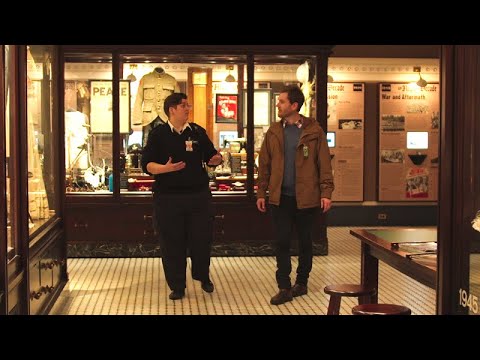
Watch the video below to see what a day in the life of a security officer is like.
Watch the video below to see what a day in the life of a security officer is like.