






Construction millwrights and industrial mechanics
Career Overview
Construction millwrights and industrial mechanics install, maintain, troubleshoot, overhaul and repair stationary industrial machinery and mechanical equipment across multiple sectors, including:
- Forestry manufacturing
- Mining and mineral processing
- LNG and energy infrastructure projects
- Hydroelectric upgrades and new energy projects
- Manufacturing modernization
- Industrial construction and shutdown maintenance
Though there is much overlap between the two, construction millwrights are mostly involved with the initial installation of industrial plant machinery and equipment. They work for millwrighting contractors. Industrial mechanics maintain and repair machinery and equipment after it has been installed. They work for manufacturing plants, utilities and other industrial businesses.
This group includes industrial textile machinery mechanics and repairers. Apprentices are also included in this group.
Job Titles
Duties
In general, construction millwrights and industrial mechanics:
- Read blueprints, diagrams and schematic drawings to develop work plans
- Install, align, dismantle and move stationary industrial machinery and mechanical equipment, such as pumps, fans, tanks, conveyors, furnaces and generators
- Operate cranes, jacks and tractors to position machinery and parts during installation, set-up and repair
- Inspect machinery and equipment to identify irregularities and malfunctions
- Install, troubleshoot and maintain power transmission, vacuum, hydraulic and pneumatic systems, and programmable logic controls
- Adjust and repair machinery or replace defective parts
- Run machine tools such as lathes and grinders to make parts needed during the set up, maintenance or rebuilding of machinery
- Do routine maintenance on machinery, including cleaning, lubrication and alignment
- Service robotics and automated equipment
- Build foundations for machinery or direct other workers to build foundations
- May decommission machinery
Industrial mechanics and millwrights may be cross trained in a second trade such as pipefitting, welding, machining or electrical maintenance.
Earnings
Earnings is income that workers receive in exchange for their labour. Depending on the type of employment, earnings can be in the form of wages (hourly), salaries (fixed monthly or annual) or self-employed earnings.
Work Environment
# Workers Employed
6,630% Employed Full Time
70%Construction millwrights and industrial mechanics usually work 40 hours per week. Shift work is common and employees may need to work on call so that they can respond to machinery breakdowns. Workers may need to temporarily relocate to remote locations. They must also be prepared for breaks in work due to industrial shutdowns or shifting demand.
Construction millwrights and industrial mechanics often work inside manufacturing facilities, where the environment is often noisy and dirty. Others work outside in a variety of weather conditions. Workers may also work at heights from ladders and scaffolds, or in cramped spaces.
Workplace hazards include heavy mechanical environments, moving machinery, falling objects and potential falls from heights. As a result, millwrights and industrial mechanics must be fully trained in safety procedures.
Increasing use of automation, monitoring systems and digital maintenance tools creates a work environment that is continually evolving.
Career Pathways
Millwrights and industrial mechanics work in closely related occupations. While working in one occupation, people in this group may learn some of the skills and techniques of the other. This gives workers a high degree of job flexibility.
Additionally, workers may be cross-trained in a second, related trade such as pipefitting, welding, machining or electrical maintenance.
Entry roles include apprentice industrial mechanic (millwright) or maintenance mechanic trainee.
With experience, workers in this group can advance to positions such as lead hand, maintenance planner, reliability specialist, supervisor and project coordinator, or they may start their own businesses.
Occupational Interests
It’s important to understand what kinds of occupations align with your interests.
For more about occupational interests visit Skills for the Future Workforce > Characteristics.
Here are the top occupational interest(s) for this career profile:

Education, Training and Skills
Grade 10 or equivalent (including English 10, Mathematics 10, Science 10) is the minimum educational level needed, although a secondary (high) school certificate is preferred.
The primary pathway to becoming a certified construction millwright and industrial mechanic is through a SkilledTradesBC apprenticeship. The apprenticeship program combines four levels of technical training with 6,360 hours of work experience. Certification is not mandatory in B.C., but it can offer more well-rounded training and will likely increase work opportunities.
For those interested in exploring this career through entry level (foundation) training programs, Trades Training BC offers schedules and programs offered by accredited post-secondary institutions across B.C.
Millwrights and industrial mechanics are eligible for a Red Seal endorsement through SkilledTradesBC, which allows holders to work in any province or territory. Once individuals pass their final certification examination, they will automatically receive a Red Seal endorsement.
Workers with about 9,540 hours of documented, directly related work experience who have not entered an apprenticeship program may get certification by passing a challenge exam administered by SkilledTradesBC.
For those who trained outside of Canada and never received certification from any Canadian jurisdiction, a full assessment is likely needed. Most occupational regulators have a process for assessment and recognize internationally trained applicants.
Contact SkilledTradesBC for details on how to apply for certification in B.C.
For information about labour mobility in Canada, visit www.workersmobility.ca.
View a list of Professional Regulatory Authorities in B.C.
Education programs in B.C.

Top Skills
Every job calls for a certain set of skills. Knowing those skills is the first step in finding a good career fit.
Here, you will find the 10 most relevant workplace skills. Some are more important to achieving success in a certain career than others. These skills may come naturally to you or you may need to gain them through education, training and experience.
See the list of work-related skills below, ranked in order of importance for this career. Check out the list and see if this career matches your skills—take that first step!

Performing routine maintenance on equipment and determining when and what kind of maintenance is needed.

Determining causes of operating errors and deciding what to do about it.

Repairing machines or systems using the needed tools.

Watching gauges, dials or other indicators to make sure that a machine is working properly.

Using logic and reasoning to identify the strengths and weaknesses of alternative solutions, conclusions or approaches to problems.

Controlling operations of equipment or systems.

Conducting tests and inspections of products, services or processes to evaluate quality or performance.

Keeping track of and assessing your performance, other individuals, or organizations to make improvements or take corrective action.

Being able to solve novel, ill-defined problems in complex, real-world settings.

Giving full attention to what other people are saying, taking time to understand the points being made, asking questions as appropriate, and not interrupting at inappropriate times.
Labour Market Statistics
Discover data, facts and information that have been gathered and analyzed. Learn about the characteristics of the economy and labour market in B.C.
Employment
Find out about employment types and trends by region and industry.
Employment
6,630Employment by Region

| Region | Employment | % Employment of this Occupation |
|---|---|---|
| Cariboo | 835 | 12.6% |
| Kootenay | 565 | 8.5% |
| Mainland/Southwest | 2,610 | 39.4% |
| North Coast and Nechako | 395 | 6.0% |
| Northeast | 360 | 5.4% |
| Thompson-Okanagan | 1,190 | 18.0% |
| Vancouver Island/Coast | 675 | 10.2% |
Labour Market Outlook
The B.C. Labour Market Outlook is a 10-year forecast of the expected supply and demand for labour in the province. It’s usually updated every year. The purpose is to provide British Columbians with the knowledge to make informed decisions on careers, skills training, education and hiring.
Forecasted Job Openings (2025-2035)
2,760Forecasted Job Openings
Forecasted Employment Growth Rate
Composition of Job Openings
Job Openings by Region (2025-2035)
| Region | Job Openings | Avg. Annual Employment Growth |
|---|---|---|
| Cariboo | 240 | -0.4% |
| Kootenay | 220 | -0.1% |
| Mainland/Southwest | 1,150 | 0.8% |
| North Coast and Nechako | 130 | 0.0% |
| Northeast | 150 | 0.6% |
| Thompson-Okanagan | 570 | 0.7% |
| Vancouver Island/Coast | 300 | 0.5% |
Industry Highlights
Learn about the opportunities in B.C.'s major industries, including employment trends, earning potential, locations of work and more.
Forecasted Job Openings by Industry
| Industry | Job Openings (2025-2035) |
|---|---|
| Manufacturing | 1,100 |
| Mining and Oil and Gas Extraction | 470 |
| Construction | 260 |
| Repair, Personal and Non-Profit Services | 210 |
| Wholesale Trade | 160 |
Insights from Industry
Today’s demand for construction millwrights and industrial mechanics is driven by a broad range of sectors, including:
- Mining and mineral processing
- LNG and energy infrastructure projects
- Hydroelectric upgrades and new energy projects
- Manufacturing modernization
- Industrial construction and shutdown maintenance
Demand for construction millwrights and industrial mechanics remains strong due to retirements, new industrial infrastructure projects and expansion in the energy, mining and resource sectors.
Technologies such as predictive maintenance, robotics, laser alignment and digital monitoring systems have increased the need for highly skilled millwrights who can troubleshoot and maintain complex equipment.
Demand is strongest for experienced workers who can supervise installations, troubleshoot equipment, or work independently in complex industrial environments. While entry-level opportunities exist, employers often report difficulty finding experienced Red Seal millwrights with strong troubleshooting and alignment skills.
Workers in this group with additional skills in areas such as welding and fabrication, electrical troubleshooting, power engineering, predictive maintenance and diagnostics, and automation or digital maintenance systems may have an advantage in finding work. This is especially true in smaller plants without a dedicated electrician or engineer.
Resources
-
British Columbia Forest Safety Council (BCFSC)www.bcforestsafe.org
-
BuildForce Canadawww.buildforce.ca/en
-
Construction Maintenance and Allied Workers Canadawww.cmaw.ca
-
Council of Forest Industries (COFI)www.cofi.org
-
Forest Products Association of Canada (FPAC)www.fpac.ca
-
Millwrights Local Union 2736www.millwrights2736.com
-
Mining Association of British Columbia (MABC)www.mining.bc.ca
-
SkilledTradesBCskilledtradesbc.ca/
-
Trades Training BCwww.tradestrainingbc.ca
-
Truck Loggers Association (TLA)www.tla.ca
-
United Steelworkers (USW)www.usw.ca
Career Videos
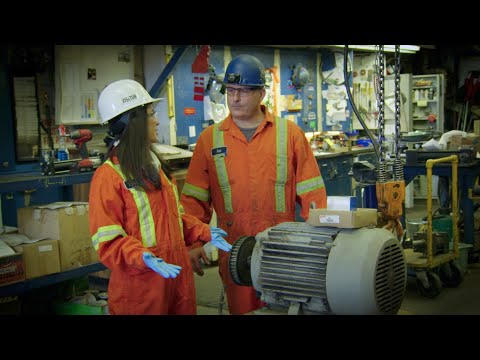
Watch the video below to see what a construction millwright does in a day.
Watch the video below to see what a construction millwright does in a day.