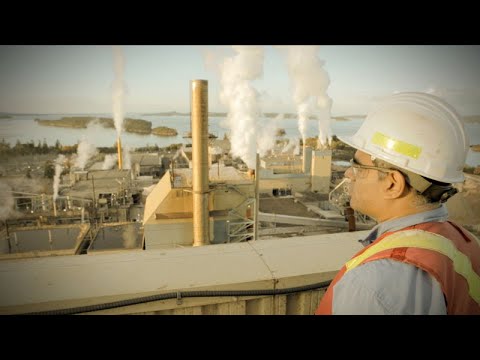







Power engineers and power systems operators
Career Overview
Power engineers and power systems operators work for power generation plants, electrical power utilities, manufacturing plants, hospitals, universities, government and commercial businesses.
Power engineers operate and maintain reactors, turbines, boilers, generators, stationary engines and auxiliary equipment to generate electrical power and to provide heat, light, refrigeration and other utility services.
Power systems operators monitor and operate control systems, switchboards and related equipment in electrical control centres to control the distribution of electrical power in transmission and distribution networks during normal operations and in power systems emergencies.
Apprentices are included in this group.
Job Titles
Duties
Power engineers:
- Operate automated or computerized control systems, stationary engines and auxiliary equipment such as boilers, turbines, generators, pumps, compressors, pollution control devices and other equipment to provide heat, ventilation, refrigeration, light and power for buildings, industrial plants and other work sites
- Start up and shut down power process equipment, control switching operations, regulate pressure, temperature, water levels and other variables
- Communicate with systems operators to co-ordinate transmission loads, frequency and line voltages
- Monitor and inspect plant equipment, computer terminals, switches, valves, gauges and other instruments to measure temperature, pressure and fuel flow to make sure plant equipment is operating at maximum efficiency
- Analyze and record instrument readings and equipment malfunctions
- Troubleshoot and perform corrective action and minor repairs to prevent equipment or system failure
- Keep a daily log of operation, maintenance and safety activities, and write reports about plant operation
- May help develop operational, maintenance and safety procedures
- May respond to emergency situations
Power systems operators:
- Operate and monitor computerized control systems or switchboards and auxiliary equipment in electrical control centres to control the distribution and regulate the flow of electrical power
- Schedule and direct station and substation power loads and line voltages to meet distribution demands during daily operations, system outages, repairs and importing or exporting of power
- Monitor and inspect station instruments, meters and alarms to ensure transmission voltages and line loadings are within prescribed limits and to detect equipment failure, line disturbances and outages
- Issue work and test permits to ensure safety of electrical and mechanical maintenance workers, help them locate system problems and assist with routine system testing
- Respond to power outages caused by windstorms, wildfires, equipment failures and other adverse events
- Communicate with field personnel and other power systems operators
- Maintain station records, logs and reports
Earnings
Earnings is income that workers receive in exchange for their labour. Depending on the type of employment, earnings can be in the form of wages (hourly), salaries (fixed monthly or annual) or self-employed earnings.
Work Environment
# Workers Employed
5,060% Employed Full Time
73%Many of these roles are shift work positions in 8- or 12-hour shifts to ensure around the clock coverage.
Junior power engineers primarily work outdoors. Senior workers usually work in a controlled indoor environment.
Working with equipment, machinery, instruments, chemicals or power/hand tools may be a source of injury. The workplace may be noisy enough to affect hearing, so safety equipment is worn to reduce this risk.
Power systems operators mostly work indoors in station control rooms or centralized control centres, using highly specialized computer-based control systems.
Career Pathways
Progression from lower to higher classes of certification for stationary or power engineers is possible with training and experience. Higher certification allows workers to take on more responsibilities in larger plants. First class engineers can progress to production or plant manager positions.
Most power systems operators train within their company and have opportunities to progress internally to more senior levels.
Occupational Interests
It’s important to understand what kinds of occupations align with your interests.
For more about occupational interests visit Skills for the Future Workforce > Characteristics.
Here are the top occupational interest(s) for this career profile:

Education, Training and Skills
Secondary (high) school certificate is usually required.
There are many entry paths to becoming a power engineer:
- Begin as a general labourer and transition to an entry-level power process job
- Complete a college training program in stationary or power engineering
There are five classes of power engineers, and you must be certified to work in this job. To become a certified power engineer, most workers complete coursework, get on-the-job experience and pass an evaluation and certification exam.
Though completion of college-level coursework is usually preferred, workers with extensive experience may be able to challenge one or more of the exams.
Most power systems operators complete internal training within their company. Career paths include:
- Completing a three- to five-year internal power systems operator apprenticeship program
- Taking BC Hydro’s in-house training program for Interchange/Plant Operator, which is posted publicly about once a year. Prerequisites include secondary (high) school certificate with English 12, Math 11 and Physics 11 (electrician Red Seal is an acceptable equivalent to Physics 11) or equivalent courses taken at a college or university level
Having at least three years’ work experience and some college or industry courses in electrical and electronic technology is a benefit when applying for this role.
Education programs in B.C.

Top Skills
Every job calls for a certain set of skills. Knowing those skills is the first step in finding a good career fit.
Here, you will find the 10 most relevant workplace skills. Some are more important to achieving success in a certain career than others. These skills may come naturally to you or you may need to gain them through education, training and experience.
See the list of work-related skills below, ranked in order of importance for this career. Check out the list and see if this career matches your skills—take that first step!

Watching gauges, dials or other indicators to make sure that a machine is working properly.

Controlling operations of equipment or systems.

Using logic and reasoning to identify the strengths and weaknesses of alternative solutions, conclusions or approaches to problems.

Keeping track of and assessing your performance, other individuals, or organizations to make improvements or take corrective action.

Understanding written sentences and paragraphs in work-related documents.

Giving full attention to what other people are saying, taking time to understand the points being made, asking questions as appropriate, and not interrupting at inappropriate times.

Being able to solve novel, ill-defined problems in complex, real-world settings.

Talking to others to share information effectively.

Considering the relative costs and benefits of potential actions to choose the most appropriate one.

Communicating effectively in writing as appropriate for the needs of the audience.
Labour Market Statistics
Discover data, facts and information that have been gathered and analyzed. Learn about the characteristics of the economy and labour market in B.C.
Employment
Find out about employment types and trends by region and industry.
Employment
5,060Employment by Region

| Region | Employment | % Employment of this Occupation |
|---|---|---|
| Cariboo | 540 | 10.7% |
| Kootenay | 510 | 10.1% |
| Mainland/Southwest | 1,820 | 35.9% |
| North Coast and Nechako | 270 | 5.3% |
| Northeast | 360 | 7.1% |
| Thompson-Okanagan | 800 | 15.8% |
| Vancouver Island/Coast | 755 | 14.9% |
Labour Market Outlook
The B.C. Labour Market Outlook is a 10-year forecast of the expected supply and demand for labour in the province. It’s usually updated every year. The purpose is to provide British Columbians with the knowledge to make informed decisions on careers, skills training, education and hiring.
Forecasted Job Openings (2025-2035)
2,530Forecasted Job Openings
Forecasted Employment Growth Rate
Composition of Job Openings
Job Openings by Region (2025-2035)
| Region | Job Openings | Avg. Annual Employment Growth |
|---|---|---|
| Cariboo | 190 | -0.1% |
| Kootenay | 260 | 0.3% |
| Mainland/Southwest | 960 | 0.9% |
| North Coast and Nechako | 120 | 0.7% |
| Northeast | 180 | 0.5% |
| Thompson-Okanagan | 400 | 0.6% |
| Vancouver Island/Coast | 420 | 0.7% |
Industry Highlights
Learn about the opportunities in B.C.'s major industries, including employment trends, earning potential, locations of work and more.
Forecasted Job Openings by Industry
| Industry | Job Openings (2025-2035) |
|---|---|
| Manufacturing | 600 |
| Health Care and Social Assistance | 290 |
| Mining and Oil and Gas Extraction | 280 |
| Utilities | 260 |
| Public Administration | 230 |
Resources
-
BC Hydro – Careerswww.bchydro.com/toolbar/careers.html?rd=careers
-
British Columbia Institute of Power Engineers (BC IPE)www.ipevancouver.ca/
-
Institute of Power Engineers (IPE), Nationalwww.nipe.ca
-
International Union of Operating Engineers (IUOE) Local 882iuoe882.ca/
-
Technical Safety BC – Power Engineer Certificationwww.technicalsafetybc.ca/technologies/boilers-pressure-vessels/power-engineer-certification
Career Videos
Watch the video below to see what a day in the life of a power engineer is like.
Watch the video below to see what a day in the life of a power engineer is like.