Plumbers
Career Overview
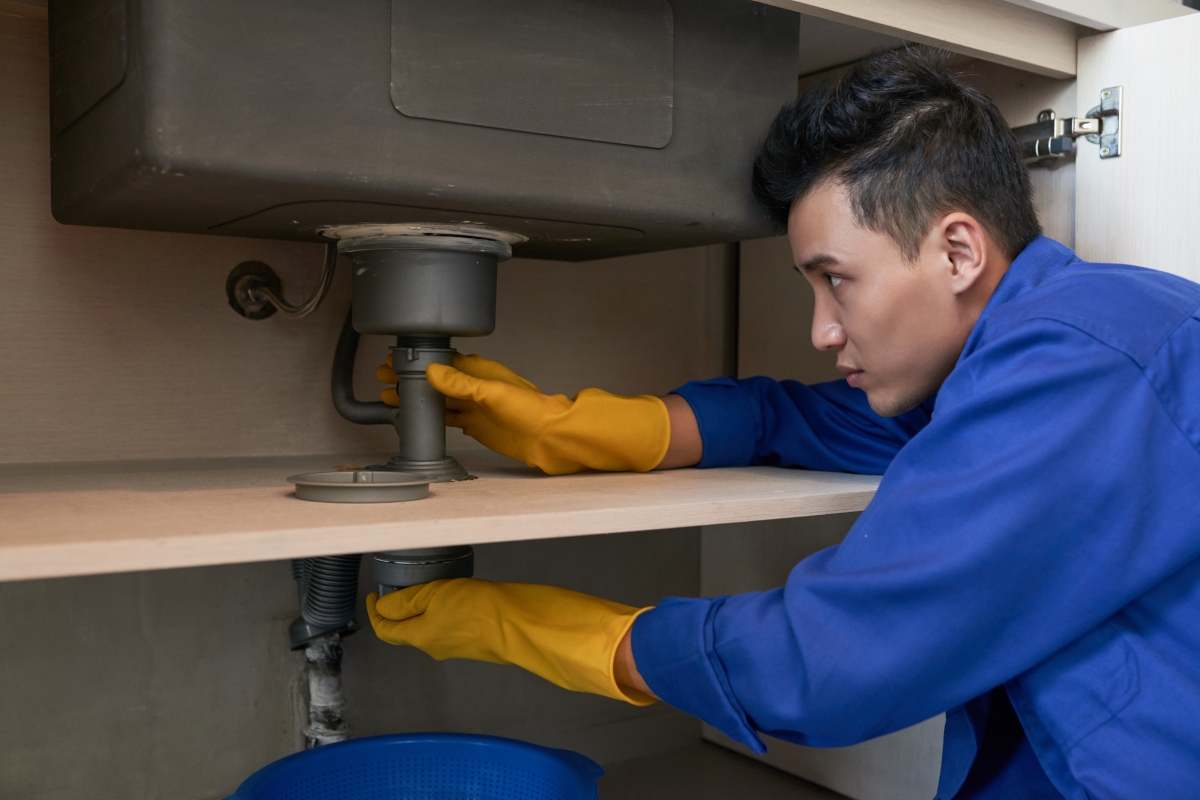
Plumbers install, repair, service and maintain pipes, fixtures and other plumbing and heating equipment used for water distribution, heating and cooling, and wastewater disposal in residential, commercial and industrial buildings.
People in this group work for plumbing contractors or in maintenance departments of factories, plants and similar establishments, or they may be self-employed.
Apprentices are also included in this group.
Job Titles
Duties
In general, plumbers:
- Install, test, repair and maintain domestic, commercial or industrial plumbing, including heating/cooling and fuel gas fixtures, appliances and specialty piping systems
- Install, test, repair, and maintain backflow preventors in domestic water distribution systems
- Read blueprints, drawings and specifications to determine layout of plumbing system, water supply network, waste and drainage systems, and fuel gas systems
- Locate and mark positions for pipe connections, passage holes and fixtures in walls and floors
- Measure, cut, bend and thread pipes using hand and power tools
- Join pipes using couplings, clamps, screws, bolts, cement or soldering, brazing and welding equipment
- Follow complex codes and rules for system installation, including the B.C. Plumbing Code
- Test pipes for leaks using air and water pressure testing equipment
- May prepare cost estimates
Earnings
Earnings is income that workers receive in exchange for their labour. Depending on the type of employment, earnings can be in the form of wages (hourly), salaries (fixed monthly or annual) or self-employed earnings.
Work Environment
# Workers Employed
9,525% Employed Full Time
58%Construction and service plumbers typically work 40 hours per week. Service plumbers may also work on an on-call basis and respond to plumbing emergencies at all hours of the day or night. Plumbers who do industrial maintenance at large facilities may do shift work.
The working environment for plumbers can be cramped, dirty and noisy, depending on the job. It is highly physical work, as plumbers carry heavy pipes and stand for much of the day. They must also be able to bend and crawl into tight spaces or work from heights with ladders or platforms. Work may be both indoors and outdoors.
Heavy lifting and working in cramped spaces can lead to muscle and joint pain. Continued use of some tools may lead to repetitive stress injuries such as tendonitis and bursitis.
Career Pathways
Workers who have completed their apprenticeships typically start out by working for a large plumbing contractor/company. Experienced plumbers may be promoted to a supervisory position.
More experienced plumbers may choose to work as independent contractors and start their own plumbing companies. With additional education, some plumbers may become certified plumbing inspectors.
Occupational Interests
It’s important to understand what kinds of occupations align with your interests.
For more about occupational interests visit Skills for the Future Workforce > Characteristics.
Here are the top occupational interest(s) for this career profile:

Education, Training and Skills
There are many paths to becoming a plumber:
- Begin an apprenticeship program in secondary (high) school
- Go to a certified trade school
- Get hired by a company as a paid apprentice (which includes on-the-job training and trade school coursework)
To become a certified plumber, students must:
- Have 6,300 hours of on-the-job training
- Complete a four-year recognized apprentice training program
- Pass a certification exam to get a Red Seal endorsement
Most apprenticeships take four years to complete, with 80 percent of the training taking place at a worksite under the supervision of a certified journeyperson. The remaining 20 percent is in a classroom with an accredited training provider. Some trade schools offer part-time and distance education. A secondary school (high school) certificate is usually required as a starting point.
B.C.’s industry training authority, SkilledTradesBC, issues credentials and funds trades training for apprentices. Once certified, plumbers receive a Red Seal endorsement, which allows holders to work in any province or territory.
For those who trained outside of Canada and never received certification from any Canadian jurisdiction, a full assessment is likely needed. Most occupational regulators have a process for assessment and recognize internationally trained applicants.
Contact SkilledTradesBC for details on how to apply for certification in B.C.
For information about labour mobility in Canada, visit www.workersmobility.ca.
View a list of Professional Regulatory Authorities in B.C.
Visit our trades training page to learn about apprenticeship and trades training in B.C.
Education programs in B.C.

Top Skills
Every job calls for a certain set of skills. Knowing those skills is the first step in finding a good career fit.
Here, you will find the 10 most relevant workplace skills. Some are more important to achieving success in a certain career than others. These skills may come naturally to you or you may need to gain them through education, training and experience.
See the list of work-related skills below, ranked in order of importance for this career. Check out the list and see if this career matches your skills—take that first step!

Installing equipment, machines, wiring, or programs to meet specifications.

Using logic and reasoning to identify the strengths and weaknesses of alternative solutions, conclusions or approaches to problems.

Determining causes of operating errors and deciding what to do about it.

Keeping track of and assessing your performance, other individuals, or organizations to make improvements or take corrective action.

Considering the relative costs and benefits of potential actions to choose the most appropriate one.

Understanding written sentences and paragraphs in work-related documents.

Watching gauges, dials or other indicators to make sure that a machine is working properly.

Talking to others to share information effectively.

Conducting tests and inspections of products, services or processes to evaluate quality or performance.

Repairing machines or systems using the needed tools.
Labour Market Statistics
Discover data, facts and information that have been gathered and analyzed. Learn about the characteristics of the economy and labour market in B.C.
Employment
Find out about employment types and trends by region and industry.
Employment
9,525Employment by Region

| Region | Employment | % Employment of this Occupation |
|---|---|---|
| Cariboo | 260 | 2.7% |
| Kootenay | 280 | 2.9% |
| Mainland/Southwest | 6,080 | 63.8% |
| North Coast and Nechako | 140 | 1.5% |
| Northeast | 85 | 0.9% |
| Thompson-Okanagan | 1,245 | 13.1% |
| Vancouver Island/Coast | 1,435 | 15.1% |
Labour Market Outlook
The B.C. Labour Market Outlook is a 10-year forecast of the expected supply and demand for labour in the province. It’s usually updated every year. The purpose is to provide British Columbians with the knowledge to make informed decisions on careers, skills training, education and hiring.
Forecasted Job Openings (2025-2035)
2,900Forecasted Job Openings
Forecasted Employment Growth Rate
Composition of Job Openings
Job Openings by Region (2025-2035)
| Region | Job Openings | Avg. Annual Employment Growth |
|---|---|---|
| Cariboo | 80 | 0.7% |
| Kootenay | 20 | -1.4% |
| Mainland/Southwest | 1,900 | 1.4% |
| North Coast and Nechako | 40 | 0.6% |
| Northeast | 10 | -0.7% |
| Thompson-Okanagan | 440 | 0.7% |
| Vancouver Island/Coast | 410 | 0.8% |
Industry Highlights
Learn about the opportunities in B.C.'s major industries, including employment trends, earning potential, locations of work and more.
Forecasted Job Openings by Industry
| Industry | Job Openings (2025-2035) |
|---|---|
| Construction | 2,680 |
| Health Care and Social Assistance | 70 |
| Educational Services | 30 |
| Public Administration | 20 |
| Manufacturing | 20 |
Insights from Industry
Over the last few years, low interest rates and a growing economy have resulted in a rapid increase in construction activity in B.C. Residential construction and renovations in the Lower Mainland, Fraser Valley, southern Vancouver Island and Okanagan regions continue to provide work for plumbers.
Commercial, institutional and industrial construction are also an important source of plumbing jobs.
Resources
-
Canadian Home Builders' Association of British Columbia (CHBA BC) - Continuing Educationeducation.chbabc.org/home.php
-
Canadian Institute of Plumbing & Heating (CIPH)www.ciph.com
-
Mechanical Contractors Association of British Columbia (MCABC)www.mcabc.org
-
Mechanical Contractors Association of Canada (MCAC)www.mcac.ca
-
Plumbing-Heating-Cooling Contractors (PHCC) Associationwww.phccweb.org
-
Skilled Trades Employment Program (STEP)www.stepbc.ca
-
SkilledTradesBCskilledtradesbc.ca
-
Trades Training BC – Jobs Boardjobs.tradestrainingbc.ca/
-
United Association: Union of Plumbers, Fitters, Welders, & Service Techs (UA)www.ua.org
-
United Association of Journeymen and Apprentices of the Plumbing & Pipefitting Industry of the US and Canada, Local 170ualocal170.com
-
Building Officials’ Association of B.C. (BOABC) / Plumbing Officials Association of British Columbia (POA)boabc.org/
-
BuildForce Canada – Career Finderwww.buildforce.ca/en/career-finder/
Career Videos
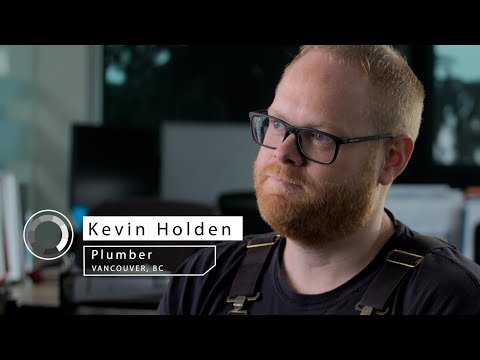
Watch the video below to see what a day in the life of a plumber is like.
Watch the video below to see what a day in the life of a plumber is like.