Paramedical occupations

 High opportunity occupation
Career Overview
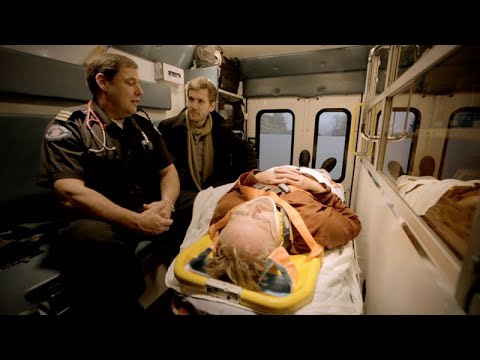
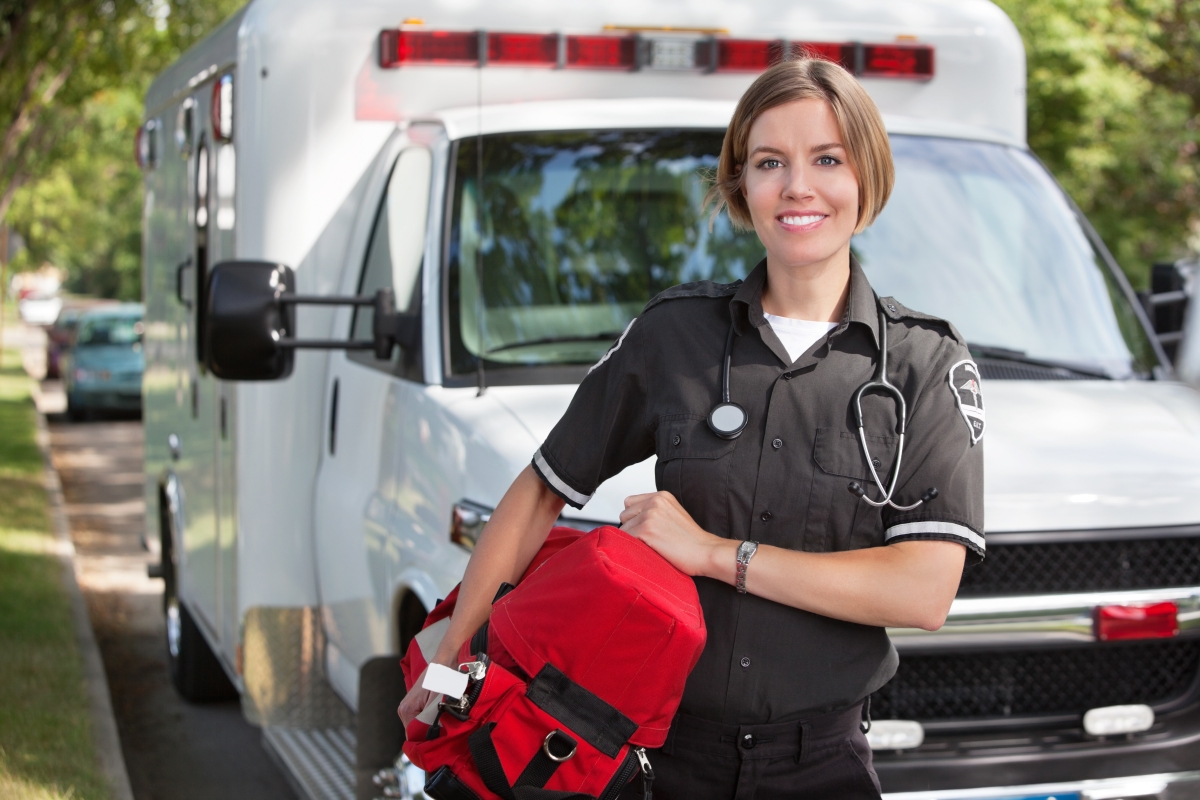
This group includes workers who administer pre-hospital emergency medical care to patients with injuries or medical illnesses and transport them to hospitals or other medical facilities for further medical care. Paramedics who are supervisors are included in this group.
People in this occupation:
- Are part of B.C.'s system of emergency medical assistants (EMAs) who give pre-hospital emergency medical care to patients with injuries or medical illnesses
- Transport patients to hospitals or other medical facilities for further medical care
- Are in one of several levels of EMAs, from emergency medical responder (EMR) to critical care paramedic (CCP)
- Are primarily employed by the BC Ambulance Service, but can also be employed by private ambulance services, hospitals, fire departments, government departments and agencies, manufacturing firms, industrial sites and other private sector establishments (i.e., first aid attendants and first responders)
- Should have excellent communication skills and have a strong desire to help people
- Must be able to make decisions calmly and efficiently in moments of crisis
- Must be able to work well independently and as part of a team
Job Titles
Duties
Workers in this group:
- Assess extent of injuries or medical illnesses of trauma victims, patients with respiratory disease and stress, overdose and poisoning victims, industrial accident victims and other ill or injured individuals to determine emergency medical treatment
- Administer pre-hospital emergency care to patients such as oxygen therapy, cardiopulmonary resuscitation (CPR), spinal immobilization, bandaging and splinting
- Establish and maintain intravenous treatment (IV), apply adjunctive equipment for ventilation and circulation complications, administer medications and provide other advanced emergency treatment to patients
- Transport patients by air, land or water to hospital or other medical facility for further medical care
- Collaborate with ambulance dispatch centres, hospital staff, police, firefighters and family members to ensure relevant information is collected and proper treatment is administered
- Document and record nature of injuries and illnesses and treatment provided
- Assist hospital personnel with provision of medical treatment, if necessary
- Maintain ambulances and emergency care equipment and supplies
- Train and supervise other paramedics
- Assist with triage of emergency patients
Emergency medical assistants have higher and more specialized training than first aid attendants.
Earnings
Earnings is income that workers receive in exchange for their labour. Depending on the type of employment, earnings can be in the form of wages (hourly), salaries (fixed monthly or annual) or self-employed earnings.
Work Environment
# Workers Employed
3,605% Employed Full Time
60%Most emergency medical assistants in B.C. work for the BC Ambulance Service. Others work for private ambulance services, hospitals, fire departments, government departments and agencies, manufacturing firms and other private sector establishments. A noteworthy subset of emergency medical assistants works in industrial settings such as oilfields and mines, serving as the first line of medical intervention in case of workplace injuries and other incidents. For many first aid attendants, providing first aid is not their primary responsibility, but is combined with the duties and responsibilities of another role that occupies the rest of their working hours.
Full-time paramedics work assigned shifts. Part-time paramedics work on call, depending on need, scheduling and availability. The BC Ambulance Service hires emergency medical responders on a part-time, on-call basis. Since services are provided 24 hours per day, weekend, evening and holiday work is required. Workers may also have to work some overtime. Members of this group in industrial and similar settings usually have assigned shifts and may have to work weekends and holidays, and this work is often seasonal.
Paramedics work indoors and outdoors in a physically demanding job. Workers spend a great deal of time standing, kneeling, bending and lifting patients in stretchers. As people whose role is to respond to medical incidents where they happen, they often perform their duties in ambulances and in public. Workers in this occupational group may be exposed to contagious or potentially dangerous diseases, so precautionary measures are taken to reduce these risks. Paramedics must frequently interact with patients and their families in emotional, stressful situations.
While work can be physically demanding as well as emotionally stressful, many find these occupations to be challenging and rewarding.
Career Pathways
Newly trained members of this group typically get positions as primary care paramedics in both industry and with the BC Ambulance Service. However, new roles are emerging for primary care paramedic graduates in B.C. as emergency room attendants in hospitals. Note that the BC Ambulance Service is the only provider of emergency healthcare in B.C. and the primary employer of most members of this group, particularly at higher levels of certification.
Members of this group can combine training with experience to advance to higher levels, and some levels, such as critical care paramedic (CCP), require that combination. In Canada, CCP is the highest level of certification paramedics can pursue through advanced training. Some paramedics may also choose careers in other emergency services or health-care fields by completing additional training.
With further training and considerable work experience, workers in this occupational group may be able to work as supervisors, operations managers or senior administrators. Other related careers include dispatcher, instructor and salesperson of emergency medical equipment.
First aid attendants with Occupational First Aid Level 3 qualification may take an Occupational First Aid to Emergency Medical Responder (OFA-EMR) bridging course to qualify to apply for EMR licensing in B.C. First aid attendants may also choose a career in occupational health and safety.
Occupational Interests
It’s important to understand what kinds of occupations align with your interests.
For more about occupational interests visit Skills for the Future Workforce > Characteristics.
Here are the top occupational interest(s) for this career profile:

Education, Training and Skills
Employment requirements for workers in this occupational group vary based on the occupation and the employer. There are four different levels within the emergency medical assistant (EMA) occupation nationally, relating to the level of training a worker has completed:
- Emergency medical responder
- Primary care paramedic
- Advanced care paramedic
- Critical care paramedic
In B.C., there are six practitioner subsets within the EMA occupation:
- Emergency medical assistant first responder (EMA FR)
- Emergency medical responder (EMR)
- Primary care paramedic (PCP)
- Advanced care paramedic (ACP)
- Critical care paramedic (CCP)
- Infant transport team (ITT)
Programs for each of these specialties vary in length and intensity, between specialties and between educational institutions.
Emergency medical assistant first responder training typically takes approximately one week. Emergency medical responders train for approximately two weeks. Primary care paramedics (PCP) require a certificate program, including practicum, usually taking approximately three months to complete and additionally requires completion of a Grade 12 diploma. Advanced care paramedics (ACP) must complete a two-year diploma program after Grade 12. Critical care paramedics and infant transport team paramedics are specialized teams within the BC Ambulance Service with additional training requirements.
Primary care paramedics and advanced care paramedics also need CPR Level “C” certification.
Critical care paramedic (CCP) is the highest level of paramedic certification within B.C. The CCP program training in B.C. is only accessible to advanced care paramedics who currently work for BC Emergency Health Services (BCEHS).
All levels of emergency medical assistants are governed by the Emergency Medical Assistants Licensing Board. To be licensed in the province, graduates with certificates from a B.C. recognized training agency must complete the appropriate licensing examinations, which include a written exam, a jurisprudence exam, and a practical or oral exam. See the Emergency Medical Assistants Licensing Board website for information on EMR and paramedic training.
Most positions in this group require a B.C. drivers license, in classes 1, 2 or 4 with Class 4 unrestricted licenses preferred, and a driving record that demonstrates safe and competent driving behaviour. Many employers also expect their hires to pass a physical abilities test and a comprehensive criminal records review.
First aid attendants working in industrial settings must hold a valid certificate of Occupational First Aid (Level 1, 2 or 3) issued by WorkSafeBC or the equivalent. Occupational first aid courses that are recognized by WorkSafeBC range in length from one day to 70 hours. They include a Transportation Endorsement for Level 1 and 2 Occupational First Aid attendants. Qualification as an EMR counts as the relevant first aid certification. For information on first aid attendant training, see the WorkSafeBC website.
Those who are certified for an occupation by a regulator elsewhere in Canada can apply for the same certification from the regulator in B.C. Under the terms of the Canadian Free Trade Agreement (CFTA), most applicants who are transferring their credentials from elsewhere in Canada will not be required to complete additional training or testing. However, the B.C. regulator may ask applicants to provide further information such as a letter of good standing, references, or criminal record check.
For those who trained outside of Canada and never received certification from any Canadian jurisdiction, a full assessment is likely needed. Most occupational regulators have a process for to assessment and recognize internationally trained applicants.
For details on how to apply for certification in B.C., contact WorkSafe BC and/or the Ministry of Health: Emergency Medical Assistants Licensing Board of BC.
For information about labour mobility in Canada, visit www.workersmobility.ca.
View a list of Professional Regulatory Authorities in B.C.
Education programs in B.C.

Top Skills
Every job calls for a certain set of skills. Knowing those skills is the first step in finding a good career fit.
Here, you will find the 10 most relevant workplace skills. Some are more important to achieving success in a certain career than others. These skills may come naturally to you or you may need to gain them through education, training and experience.
See the list of work-related skills below, ranked in order of importance for this career. Check out the list and see if this career matches your skills—take that first step!

Actively looking for ways to help people.

Using logic and reasoning to identify the strengths and weaknesses of alternative solutions, conclusions or approaches to problems.

Giving full attention to what other people are saying, taking time to understand the points being made, asking questions as appropriate, and not interrupting at inappropriate times.

Understanding written sentences and paragraphs in work-related documents.

Being aware of others’ reactions and understanding why they react as they do.

Understanding how new information could be used to solve current and future problems in making decisions.

Talking to others to share information effectively.

Teaching others how to do something.

Considering the relative costs and benefits of potential actions to choose the most appropriate one.

Keeping track of and assessing your performance, other individuals, or organizations to make improvements or take corrective action.
Labour Market Statistics
Discover data, facts and information that have been gathered and analyzed. Learn about the characteristics of the economy and labour market in B.C.
Employment
Find out about employment types and trends by region and industry.
Employment
3,605Employment by Region

| Region | Employment | % Employment of this Occupation |
|---|---|---|
| Cariboo | 175 | 4.9% |
| Kootenay | 215 | 6.0% |
| Mainland/Southwest | 1,485 | 41.2% |
| North Coast and Nechako | 150 | 4.2% |
| Northeast | 65 | 1.8% |
| Thompson-Okanagan | 595 | 16.5% |
| Vancouver Island/Coast | 920 | 25.5% |
Labour Market Outlook
The B.C. Labour Market Outlook is a 10-year forecast of the expected supply and demand for labour in the province. It’s usually updated every year. The purpose is to provide British Columbians with the knowledge to make informed decisions on careers, skills training, education and hiring.
Forecasted Job Openings (2025-2035)
1,910Forecasted Job Openings
Forecasted Employment Growth Rate
Composition of Job Openings
Job Openings by Region (2025-2035)
| Region | Job Openings | Avg. Annual Employment Growth |
|---|---|---|
| Cariboo | 80 | 2.2% |
| Kootenay | 150 | 2.2% |
| Mainland/Southwest | 810 | 2.2% |
| North Coast and Nechako | 80 | 2.2% |
| Northeast | 30 | 1.2% |
| Thompson-Okanagan | 310 | 2.0% |
| Vancouver Island/Coast | 450 | 2.3% |
Industry Highlights
Learn about the opportunities in B.C.'s major industries, including employment trends, earning potential, locations of work and more.
Forecasted Job Openings by Industry
| Industry | Job Openings (2025-2035) |
|---|---|
| Health Care and Social Assistance | 1,810 |
| Public Administration | 40 |
| Educational Services | 10 |
| Wholesale Trade | 10 |
| Professional, Scientific and Technical Services | 10 |
Insights from Industry
B.C.’s population is both growing and aging, increasing career opportunities across all roles in healthcare. The demand for emergency services, including members of this group, is especially robust. Paramedics are now being used increasingly outside the traditional pre-hospital setting, further increasing demand. Some provide care in hospitals and in industry settings.
There may be increased demand for advanced care level paramedics in hospital emergency room settings and for rural health-care teams because of their greater scope of practice. Rural and northern communities tend to be particularly underserved, increasing opportunities in these areas.
The majority of first aid attendants provide first aid services as one aspect of their job. Industry sources indicate there are many qualified first aid attendants in the labour market and that getting a full-time position as a first aid attendant is difficult. Those interested in working as first aid attendants must have other skills they can apply in an office or on a job site in addition to first aid skills.
Resources
-
BC Emergency Health Services – Careerswww.bcehs.ca/careers
-
BC Emergency Health Services (BCEHS)www.bcehs.ca
-
BC Emergency Medical Assistants Licensing Boardwww2.gov.bc.ca/gov/content/health/about-bc-s-health-care-system/partners/colleges-boards-and-commissions/emergency-medical-assistants-licensing-board
-
British Columbia Health Authoritieswww2.gov.bc.ca/gov/content/health/about-bc-s-health-care-system/partners/health-authorities
-
B.C. Ministry of Healthwww.gov.bc.ca/health/
-
Fraser Healthwww.fraserhealth.ca/
-
Health Match BCwww.healthmatchbc.org/
-
Interior Health – Jobsjobs.interiorhealth.ca/
-
Island Healthwww.islandhealth.ca/
-
Northern Health – Careerscareers.northernhealth.ca/
-
Paramedic Association of Canadawww.paramedic.ca
-
Provincial Health Services Authority (PHSA) – Jobsjobs.phsa.ca/
-
Vancouver Coastal Health (VCH)www.vch.ca/
Career Videos
Watch the video below to see what a day in the life of a paramedic is like.
Watch the video below to see what a day in the life of a paramedic is like.