Aircraft mechanics and aircraft inspectors
Career Overview
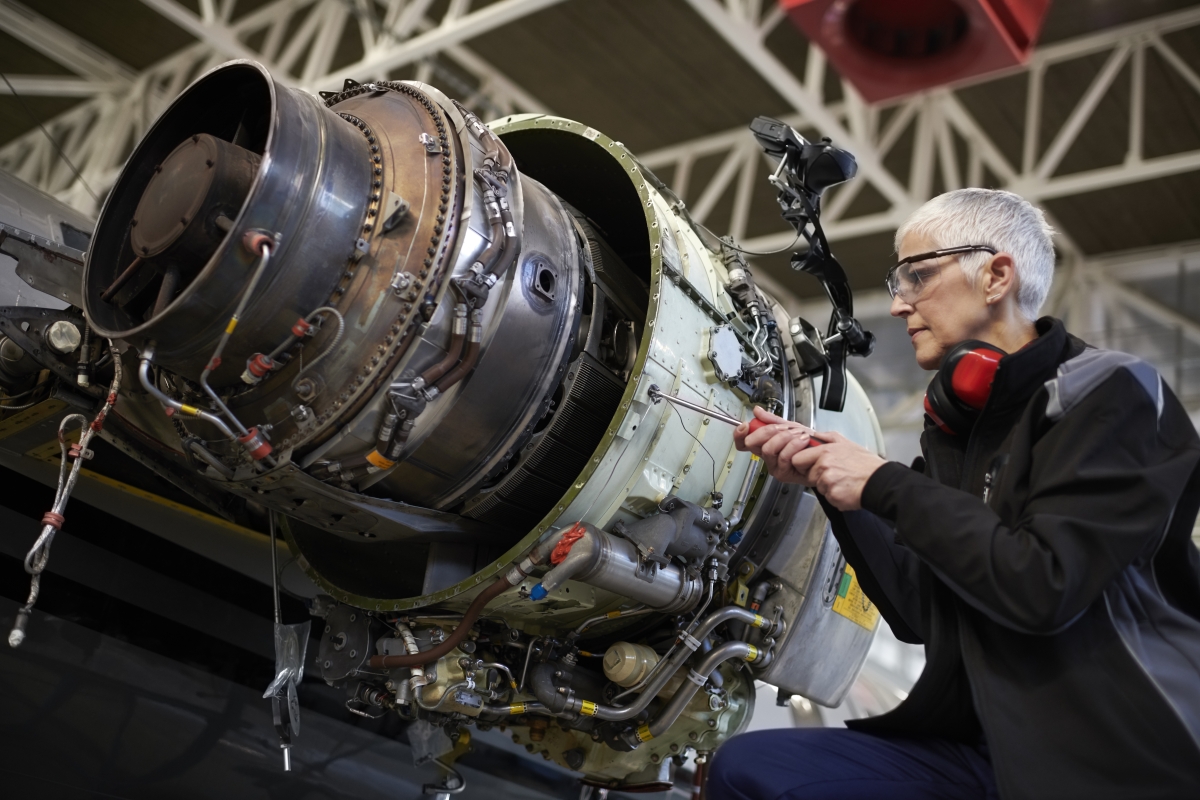
Aircraft maintenance engineers (mechanics) and aircraft inspectors work directly with aircraft to either maintain, overhaul, modify and test their systems or to inspect aircraft following such work. This group focuses on mechanical and hydraulic systems rather than aircraft software or electronics. Aircraft mechanics and inspectors are typically employed by aircraft manufacturers, airlines and aircraft operators such as the armed forces.
Job Titles
Duties
Aircraft maintenance engineers:
- Perform and document scheduled maintenance work on aircraft
- Troubleshoot and repair aircraft structural, mechanical, electrical and hydraulic systems to identify problems and adjust and repair systems according to specifications, technical drawings, manuals and established procedures
- Install or modify aircraft engines and mechanical, electrical, hydraulic, flight control, fuel and pneumatic systems
- Dismantle and reassemble airframes, aircraft engines or other aircraft systems for repair, overhaul and cleaning
- Order and maintain inventory of parts and supplies
Aircraft inspectors:
- Inspect structural, electrical, hydraulic and mechanical systems of aircraft and make sure they meet Transport Canada and company standards of performance and safety
- Inspect work of aircraft mechanics performing maintenance, repair and overhaul, or modification of aircraft and aircraft mechanical systems to make sure standards and procedures are met
- Maintain detailed repair, inspection and certification records and reports
Mechanics and inspectors can specialize in working on specific aircraft parts, such as engines, engine accessories, airframes, propellers, mechanical components or hydraulic systems; or on specific kinds of aircraft, such as light aircraft, jet transports or helicopters.
Earnings
Earnings is income that workers receive in exchange for their labour. Depending on the type of employment, earnings can be in the form of wages (hourly), salaries (fixed monthly or annual) or self-employed earnings.
Work Environment
# Workers Employed
2,805% Employed Full Time
70%Aircraft mechanics and inspectors typically work in controlled indoor environments such as aircraft hangars and manufacturing facilities. These environments can be loud enough to present a risk of hearing loss, mitigated by mandatory protective equipment. This group often works with power tools, heavy equipment and machinery that may be a source of injury.
Career Pathways
With experience, aircraft inspectors may progress to shop inspector or supervisor. Similarly, aircraft maintenance engineers (mechanics) may progress to foreman/woman, shop supervisor or aircraft inspector.
Aircraft maintenance engineer (AME) licences are issued in the following categories:
- M1 (Maintenance – Mechanical, Small Aircraft)
- M2 (Maintenance – Mechanical, Large Aircraft)
- E (Electronics/Avionics)
- S (Structures)
Aircraft mechanics and inspectors may acquire further endorsements to their AME licence, allowing them to inspect and certify a broader range of aircraft and aircraft systems.
Occupational Interests
It’s important to understand what kinds of occupations align with your interests.
For more about occupational interests visit Skills for the Future Workforce > Characteristics.
Here are the top occupational interest(s) for this career profile:

Education, Training and Skills
Both aircraft maintenance engineers (mechanics) and aircraft inspectors require the following:
- A secondary school diploma
- A college diploma in aircraft maintenance or completion of a four-year apprenticeship program
- Several years of on-the-job training (aircraft maintenance engineers)
Aircraft inspectors additionally require several years of experience as aircraft mechanics.
Aircraft mechanics inspectors who sign maintenance releases and certify airworthiness require an Aircraft Maintenance Engineer's (AME) licence issued by Transport Canada.
In some jurisdictions, specific roles may benefit from voluntary trade certification in some jurisdictions.
- Trade certification for aircraft maintenance engineers is available, but voluntary, in Ontario, the Northwest Territories and Nunavut
- Trade certification for aircraft structural technicians is available, but voluntary, in B.C.
- Industry certification from the Canadian Aviation Maintenance Council for some occupations in this group is available, but voluntary
For more information please see SkilledTradesBC's website at https://skilledtradesbc.ca.
Trades training resources
Visit our trades training page at www.workbc.ca/trades to learn about apprenticeship and trades training in B.C.
Education programs in B.C.

Top Skills
Every job calls for a certain set of skills. Knowing those skills is the first step in finding a good career fit.
Here, you will find the 10 most relevant workplace skills. Some are more important to achieving success in a certain career than others. These skills may come naturally to you or you may need to gain them through education, training and experience.
See the list of work-related skills below, ranked in order of importance for this career. Check out the list and see if this career matches your skills—take that first step!

Using logic and reasoning to identify the strengths and weaknesses of alternative solutions, conclusions or approaches to problems.

Understanding written sentences and paragraphs in work-related documents.

Talking to others to share information effectively.

Conducting tests and inspections of products, services or processes to evaluate quality or performance.

Watching gauges, dials or other indicators to make sure that a machine is working properly.

Giving full attention to what other people are saying, taking time to understand the points being made, asking questions as appropriate, and not interrupting at inappropriate times.

Keeping track of and assessing your performance, other individuals, or organizations to make improvements or take corrective action.

Being able to solve novel, ill-defined problems in complex, real-world settings.

Determining causes of operating errors and deciding what to do about it.

Communicating effectively in writing as appropriate for the needs of the audience.
Labour Market Statistics
Discover data, facts and information that have been gathered and analyzed. Learn about the characteristics of the economy and labour market in B.C.
Employment
Find out about employment types and trends by region and industry.
Employment
2,805Employment by Region

| Region | Employment | % Employment of this Occupation |
|---|---|---|
| Cariboo | 85 | 3.0% |
| Kootenay | 35 | 1.2% |
| Mainland/Southwest | 1,590 | 56.6% |
| North Coast and Nechako | 60 | 2.1% |
| Northeast | 10 | 0.4% |
| Thompson-Okanagan | 570 | 20.3% |
| Vancouver Island/Coast | 450 | 16.0% |
Labour Market Outlook
The B.C. Labour Market Outlook is a 10-year forecast of the expected supply and demand for labour in the province. It’s usually updated every year. The purpose is to provide British Columbians with the knowledge to make informed decisions on careers, skills training, education and hiring.
Forecasted Job Openings (2025-2035)
1,440Forecasted Job Openings
Forecasted Employment Growth Rate
Composition of Job Openings
Job Openings by Region (2025-2035)
| Region | Job Openings | Avg. Annual Employment Growth |
|---|---|---|
| Cariboo | 30 | -0.2% |
| Kootenay | 20 | 4.1% |
| Mainland/Southwest | 910 | 0.3% |
| North Coast and Nechako | 50 | 1.7% |
| Northeast | Not available | Not available |
| Thompson-Okanagan | 230 | 0.5% |
| Vancouver Island/Coast | 200 | 0.6% |
Industry Highlights
Learn about the opportunities in B.C.'s major industries, including employment trends, earning potential, locations of work and more.
Forecasted Job Openings by Industry
| Industry | Job Openings (2025-2035) |
|---|---|
| Transportation and Warehousing | 1,180 |
| Manufacturing | 130 |
| Public Administration | 50 |
| Repair, Personal and Non-Profit Services | 20 |
| Wholesale Trade | 20 |
Resources
-
Aerospace Industries Association of Canada (AIAC)www.aiac.ca
-
Aerospace Industries Association of Canada (AIAC) Pacificaiacpacific.ca
-
Pacific Aircraft Maintenance Engineers Associationwww.pamea.com
-
BC Aviation Councilwww.bcaviationcouncil.org/
Career Videos
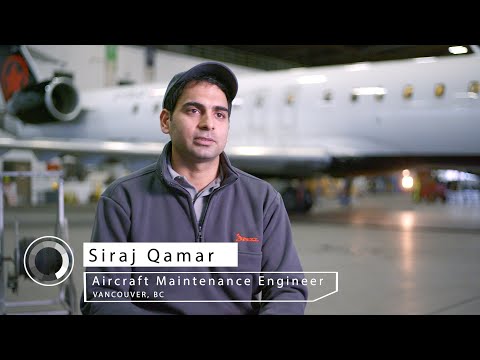
Watch the video below to see what a day in the life of an aircraft maintenance engineer is like.
Watch the video below to see what a day in the life of an aircraft maintenance engineer is like.