Air pilots, flight engineers and flying instructors
Career Overview
Aircraft pilots and flight instructors work for airline and air freight companies, flight schools and other public and private sector aircraft operators.
Pilots fly fixed-wing aircraft and helicopters to provide air transportation and other services, such as crop spraying and aerial surveying. Pilots also conduct pre-flight aircraft inspections and coordinate with flight crews.
Flight instructors teach flying techniques and procedures to student and licensed pilots.
Job Titles
Duties
Aircraft pilots:
- Conduct pre-flight inspection of aircraft and check passenger and cargo distribution to ensure that weight and balance specifications are met
- Coordinate flight planning activities with ground crews and company dispatchers, inform crew members of flight plans and procedures and direct activities of aircraft crew during flights
- Contact air traffic control for takeoff, enroute and landing clearances as well as other traffic information
- Monitor functioning of aircraft equipment and systems during flights, maintain communications with flight dispatchers and weather forecasters and respond to and report in-flight emergencies and malfunctions
- Prepare flight evaluation reports
- Train new pilots to use new equipment or prepare them for examinations to revalidate or upgrade existing licences
- Specialized pilots may may fly new or experimental planes to examine their flight performance and safety; participate in search and rescue operations; operate as forest firefighters using specialized aircraft; or perform aerial surveying, crop dusting and other specialized tasks
Flight instructors:
- Instruct student pilots in procedures and techniques of flying aircraft and in ground-school subjects such as navigation, radio procedures and flying regulations
- Train licensed pilots for additional certification
Earnings
Earnings is income that workers receive in exchange for their labour. Depending on the type of employment, earnings can be in the form of wages (hourly), salaries (fixed monthly or annual) or self-employed earnings.
Work Environment
# Workers Employed
2,725% Employed Full Time
61%Pilots and flight instructors typically perform their work inside aircraft, but a noteworthy component of both roles is performed in offices and schools. Depending on the routes flown, weather and similar concerns, working conditions can be treacherous. Working near aircraft exteriors may expose pilots to sound volumes high enough to cause marked distraction or hearing loss.
Career Pathways
Cumulative hours of flying experience can qualify pilots for different kinds of aircraft, routes, flight paths and similar promotions. The most experienced pilots fly difficult mountain routes, fly in difficult weather conditions and otherwise take challenging assignments unsafe for less experienced pilots. The highest levels require the Airline Transport Pilot License as well.
Occupational Interests
It’s important to understand what kinds of occupations align with your interests.
For more about occupational interests visit Skills for the Future Workforce > Characteristics.
Here are the top occupational interest(s) for this career profile:

Education, Training and Skills
Aircraft pilots
- Completion of secondary school and graduation from a certified flying or aviation school
- A university degree or college diploma may be required
- Aircraft pilots generally require a minimum number of airtime hours before they become employable
- Some new pilots self-finance this requirement through aircraft rental
- Another option for building airtime hours is to obtain a Flight Instructor Rating and seek employment immediately as a flight instructor
- A commercial pilot licence (more than 200 hours of flight experience) or an air transport pilot licence (more than 1500 hours of flight experience) is required depending on the aircraft and level of service
- Additional licences or endorsements to fly different types of aircraft are required
- Employers may provide structured training specific to their needs
Flight instructors
- Completion of secondary school and graduation from a certified flying or aviation school
- A university degree or college diploma may be required
- A commercial pilot license or an air transport pilot licence, combined with a Flight Instructor Rating
- Various advanced aircraft may require a Type Rating from Transport Canada
Aircraft flight is a federally regulated industry, so qualifications and training are transferrable across Canada.
Education programs in B.C.

Top Skills
Every job calls for a certain set of skills. Knowing those skills is the first step in finding a good career fit.
Here, you will find the 10 most relevant workplace skills. Some are more important to achieving success in a certain career than others. These skills may come naturally to you or you may need to gain them through education, training and experience.
See the list of work-related skills below, ranked in order of importance for this career. Check out the list and see if this career matches your skills—take that first step!

Controlling operations of equipment or systems.

Watching gauges, dials or other indicators to make sure that a machine is working properly.

Using logic and reasoning to identify the strengths and weaknesses of alternative solutions, conclusions or approaches to problems.

Keeping track of and assessing your performance, other individuals, or organizations to make improvements or take corrective action.

Giving full attention to what other people are saying, taking time to understand the points being made, asking questions as appropriate, and not interrupting at inappropriate times.

Talking to others to share information effectively.

Considering the relative costs and benefits of potential actions to choose the most appropriate one.

Understanding written sentences and paragraphs in work-related documents.

Adjusting actions in relation to others' actions.

Understanding how new information could be used to solve current and future problems in making decisions.
Labour Market Statistics
Discover data, facts and information that have been gathered and analyzed. Learn about the characteristics of the economy and labour market in B.C.
Employment
Find out about employment types and trends by region and industry.
Employment
2,725Employment by Region

| Region | Employment | % Employment of this Occupation |
|---|---|---|
| Cariboo | 90 | 3.3% |
| Kootenay | 80 | 2.9% |
| Mainland/Southwest | 1,440 | 52.9% |
| North Coast and Nechako | 70 | 2.6% |
| Northeast | 45 | 1.7% |
| Thompson-Okanagan | 475 | 17.5% |
| Vancouver Island/Coast | 525 | 19.3% |
Labour Market Outlook
The B.C. Labour Market Outlook is a 10-year forecast of the expected supply and demand for labour in the province. It’s usually updated every year. The purpose is to provide British Columbians with the knowledge to make informed decisions on careers, skills training, education and hiring.
Forecasted Job Openings (2025-2035)
1,410Forecasted Job Openings
Forecasted Employment Growth Rate
Composition of Job Openings
Job Openings by Region (2025-2035)
| Region | Job Openings | Avg. Annual Employment Growth |
|---|---|---|
| Cariboo | 30 | -0.3% |
| Kootenay | 50 | 5.7% |
| Mainland/Southwest | 640 | 0.2% |
| North Coast and Nechako | 70 | 2.0% |
| Northeast | 50 | 1.7% |
| Thompson-Okanagan | 240 | 0.6% |
| Vancouver Island/Coast | 340 | 0.9% |
Industry Highlights
Learn about the opportunities in B.C.'s major industries, including employment trends, earning potential, locations of work and more.
Forecasted Job Openings by Industry
| Industry | Job Openings (2025-2035) |
|---|---|
| Transportation and Warehousing | 1,260 |
| Educational Services | 70 |
| Public Administration | 30 |
| Professional, Scientific and Technical Services | 20 |
| Manufacturing | 10 |
Resources
-
Air Transport Association of Canada (ATAC)www.atac.ca/
-
Aviation Career – Canada Aviation Jobswww.careersinaviation.ca
-
British Columbia Aviation Council (BCAC)www.bcaviationcouncil.org
-
Canadian Owners and Pilots Association (COPA)www.copanational.org/en/presidents_corner_english
-
Transport Canada – Air Transportationwww.tc.gc.ca/en/services/aviation.html
Career Videos
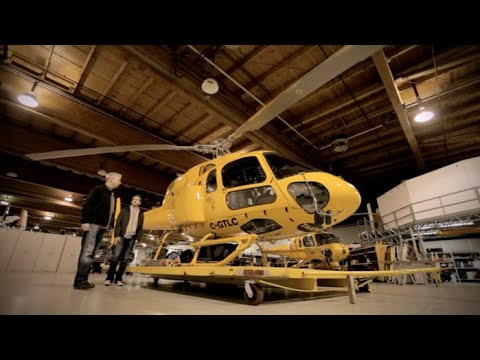
Watch the video below and see what it’s like to be a helicopter pilot.
Watch the video below and see what it’s like to be a helicopter pilot.