Dentists

 High opportunity occupation
Career Overview
Dentists diagnose, treat and prevent disorders of the mouth. Although the emphasis of dentistry is on tooth care, they can also examine, diagnose and treat oral conditions that are not related to teeth, including conditions of the jaw and surrounding muscles. They work in private practices, hospitals, clinics, public health facilities or universities.
Dentists must have an aptitude for using mechanical equipment as well as a high degree of manual dexterity. They must also be patient and have strong interpersonal and communication skills. Dentists often manage teams of hygienists and technicians as well as performing dental services themselves.
In general practice, the emphasis of dentistry has shifted from treatment to prevention of problems of the teeth and mouth.
Job Titles
Duties
Dentists of all specialties can perform the following duties:
- Examine patients' teeth, gums and surrounding tissue to diagnose disease, injury and decay and plan appropriate treatment
- Restore, extract and replace diseased and decayed teeth
- Perform oral surgery, periodontal surgery and other treatments
- Clean teeth and instruct patients on oral hygiene
- Design bridgework, fit dentures and provide appliances to correct abnormal positioning of the teeth and jaws, or write fabrication instructions or prescriptions for use by denturists and dental technicians
- Supervise dental hygienists, dental assistants and other staff
Dentists can also take up various specialties with additional duties.
Dental anesthesiologists:
- Provide dental anesthesia, including both sedation and general anesthesia, for anxiety and pain control during dental treatments
- Work with children, patients with disabilities and other people unable to receive dental services without anesthesia
Dental public health specialists:
- Diagnose, prevent and control dental diseases and promote oral health in the community through organized efforts and programs
Endodontists:
- Diagnose, treat and prevent diseases and injuries of the dental pulp (tooth interior) and the tissues surrounding the tooth root
- Perform root canal therapy and other supportive measures
Oral medicine specialists:
- Diagnose and treat diseases of the mouth and jaw, including oral mucosal diseases, neuromuscular conditions such as TMJ (temporomandibular joint) pain and orofacial pain disorders (conditions)
- Support and treat patients with oral diseases that do not directly involve the teeth
- Provide dental management for people with complex medical conditions
Oral pathologists:
- Diagnose and treat diseases of the oral mucosa using clinical, microscopic, radiographic or other laboratory procedures
Oral and maxillofacial radiologists:
- Make and interpret diagnostic X-rays and other images of the head and neck using intraoral and panoramic radiography for diagnosis and management
- Perform TMJ and implant tomography, orthodontic radiographic examinations and diagnostic consultations
Oral and maxillofacial surgeons:
- Oral and maxillofacial surgeons operate on diseases, injuries or deficiencies of a person's jaw, face, mouth and teeth
Orthodontists:
- Study the growth and development of teeth and jaws
- Diagnose, prevent and correct dental/facial irregularities to correctly align teeth and jaws using braces and similar devices
Pediatric dentists:
- Provide dental care and consultation for infants and children through adolescence, including those with medical concerns or special needs.
Periodontists:
- Diagnose, prevent and treat diseases and conditions affecting the bone, gums and other tissues that support the teeth, including with surgery
- Place dental implants, manage associated complications and perform procedures to improve the function and aesthetics of the mouth’s soft tissue
Prosthodontists:
- Diagnose, restore and maintain aesthetics, function and health of teeth and jaws
- Repair natural teeth or replace missing teeth and adjoining tissues with crowns, bridges, dentures and other devices
Earnings
Earnings is income that workers receive in exchange for their labour. Depending on the type of employment, earnings can be in the form of wages (hourly), salaries (fixed monthly or annual) or self-employed earnings.
Work Environment
# Workers Employed
3,705% Employed Full Time
21%Dentists work in clean, well-lit, well-equipped offices. Though most dentists operate private practices, some are employed by large health care facilities or multidisciplinary care teams, including in hospitals.
Dentists in private practice often have the flexibility to choose when and how many hours (full time or part time) they want to work. In some instances, dentists may need to adjust hours to meet patient needs.
Dentists follow dental practice infection control protocols and procedures and wear masks, gloves and safety glasses to avoid transmission of infectious diseases. Safety precautions are also taken when using hazardous chemicals or equipment.
Dentists must be familiar with the use of a wide variety of equipment for various procedures. These professionals may experience neck and or back strain when performing long procedures. Some dental procedures involve precise hand and wrist movements that can lead to repetitive stress injuries.
Career Pathways
After graduation, most new dentists enter a private practice with an established dentist. After gaining experience, many dentists will open their own practice. Partnerships with other dentists and group practices are also becoming increasingly common.
With additional education and training (usually one to four years), dentists can become certified specialists in a dental specialty recognized by the British Columbia College of Oral Health Professionals (BCCOHP).
Opportunities to work in research facilities, crime labs or for government health authorities may also be available, particularly for dentists with additional education in law, law enforcement, life sciences or medical research.
Occupational Interests
It’s important to understand what kinds of occupations align with your interests.
For more about occupational interests visit Skills for the Future Workforce > Characteristics.
Here are the top occupational interest(s) for this career profile:


Education, Training and Skills
Dentists must complete a degree in dentistry to work in this occupation. The Doctor of Dental Medicine degree is the most common path; however, the Doctor of Dental Surgery or Bachelor of Dental Surgery degrees offered by some schools in Canada are sufficient. As the exams and degrees are both defined by national or higher-level organizations, dentistry education can be pursued outside of B.C.
The Faculty of Dentistry at the University of British Columbia offers the province's only program that leads to a Doctor of Dental Medicine degree (DMD). Entry into the program requires at least three years of post-secondary studies with some prerequisite courses, a minimum GPA, and a minimum score on the Dental Aptitude Test (DAT) administered by the Canadian Dental Association (CDA). The program takes four years to complete and includes some clinical experience. For more information on this program, visit the UBC website.
Further education beyond a dental medicine degree or dental surgery degree is required to become a dental specialist.
Continuing education and professional development are required throughout the careers of dentists and dental specialists to keep skills current and maintain certification.
To practice in B.C., all dentists must be registered with the British Columbia College of Oral Health Professionals (BCCOHP). Dentists who are certified for that occupation by a regulator elsewhere in Canada can apply for the same certification from the regulator in B.C. Under the terms of the Canadian Free Trade Agreement (CFTA), most applicants who are transferring their credentials from elsewhere in Canada will not be required to complete additional training or testing. However, the B.C. regulator may ask applicants to provide further information such as a letter of good standing, references, or criminal record check.
For information about labour mobility in Canada, visit www.workersmobility.ca.
Those who trained outside of Canada and never received certification from any Canadian jurisdiction likely need a full assessment to transfer their credentials. Most occupational regulators have a process for assessment and recognize internationally trained applicants.
Contact the British Columbia College of Oral Health Professionals (BCCOHP) for details on how to apply for certification in B.C.
View a list of Professional Regulatory Authorities in B.C.
Education programs in B.C.

Top Skills
Every job calls for a certain set of skills. Knowing those skills is the first step in finding a good career fit.
Here, you will find the 10 most relevant workplace skills. Some are more important to achieving success in a certain career than others. These skills may come naturally to you or you may need to gain them through education, training and experience.
See the list of work-related skills below, ranked in order of importance for this career. Check out the list and see if this career matches your skills—take that first step!

Using logic and reasoning to identify the strengths and weaknesses of alternative solutions, conclusions or approaches to problems.

Being able to solve novel, ill-defined problems in complex, real-world settings.

Talking to others to share information effectively.

Giving full attention to what other people are saying, taking time to understand the points being made, asking questions as appropriate, and not interrupting at inappropriate times.

Understanding written sentences and paragraphs in work-related documents.

Keeping track of and assessing your performance, other individuals, or organizations to make improvements or take corrective action.

Considering the relative costs and benefits of potential actions to choose the most appropriate one.

Being aware of others’ reactions and understanding why they react as they do.

Understanding how new information could be used to solve current and future problems in making decisions.

Managing one’s own time and the time of others.
Labour Market Statistics
Discover data, facts and information that have been gathered and analyzed. Learn about the characteristics of the economy and labour market in B.C.
Employment
Find out about employment types and trends by region and industry.
Employment
3,705Employment by Region

| Region | Employment | % Employment of this Occupation |
|---|---|---|
| Cariboo | 60 | 1.6% |
| Kootenay | 110 | 3.0% |
| Mainland/Southwest | 2,570 | 69.4% |
| North Coast and Nechako | 50 | 1.3% |
| Northeast | 20 | 0.5% |
| Thompson-Okanagan | 385 | 10.4% |
| Vancouver Island/Coast | 510 | 13.8% |
Labour Market Outlook
The B.C. Labour Market Outlook is a 10-year forecast of the expected supply and demand for labour in the province. It’s usually updated every year. The purpose is to provide British Columbians with the knowledge to make informed decisions on careers, skills training, education and hiring.
Forecasted Job Openings (2025-2035)
2,070Forecasted Job Openings
Forecasted Employment Growth Rate
Composition of Job Openings
Job Openings by Region (2025-2035)
| Region | Job Openings | Avg. Annual Employment Growth |
|---|---|---|
| Cariboo | 30 | 2.2% |
| Kootenay | 70 | 2.2% |
| Mainland/Southwest | 1,480 | 2.3% |
| North Coast and Nechako | 30 | 2.5% |
| Northeast | 10 | 1.2% |
| Thompson-Okanagan | 190 | 2.1% |
| Vancouver Island/Coast | 250 | 2.4% |
Industry Highlights
Learn about the opportunities in B.C.'s major industries, including employment trends, earning potential, locations of work and more.
Forecasted Job Openings by Industry
| Industry | Job Openings (2025-2035) |
|---|---|
| Health Care and Social Assistance | 2,060 |
Insights from Industry
B.C.’s population is both growing and aging, increasing demand for dentistry just as much as other healthcare specialties. Demand for care related to aging, such as prosthodontics, is increasing more than other specialties. Additionally, many opportunities for dentists will become available due to retirements, which are expected to make up a significant number of new openings.
Industry reports the current supply of new graduates is insufficient to meet demand, especially in rural and northern regions that tend to face healthcare shortages in general. As such, new graduates may find increased employment opportunities in more rural areas of the province.
Federal and provincial moves aim to reduce financial barriers to dental care and integrate dental care into broader healthcare practice. There is increasing demand for dental services, keeping demand for new dentists robust.
Advances in biomedical sciences and disease patterns continuously change the delivery of dental care. As well, improvements in many aspects of dental care are enabling dentists to undertake more complex treatments. These improvements may also increase demand.
Resources
-
B.C. Ministry of Healthwww.gov.bc.ca/health
-
British Columbia Dental Association (BCDA)www.bcdental.org
-
British Columbia Dental Association (BCDA) – Careersbcdental.org/careers/
-
Canadian Dental Association (CDA)www.cda-adc.ca
-
British Columbia College of Oral Health Professionals (BCCOHP)oralhealthbc.ca/
-
Dental Technicians Association of BC – Job Boarddtabc.ca/jobs-classified-ads
-
The Pacific Dental Conferencewww.pdconf.com
-
University of British Columbia Faculty of Dentistrywww.dentistry.ubc.ca
Career Videos
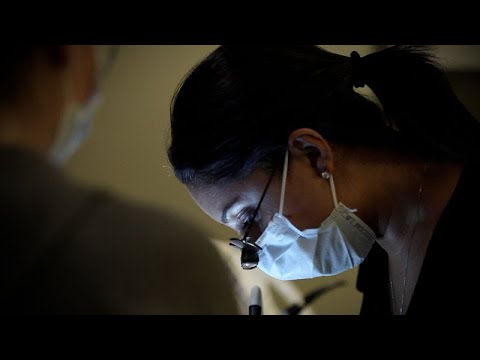
Watch the video below to see what a day in the life of a dentist is like.
Watch the video below to see what a day in the life of a dentist is like.