Hairstylists and barbers
Career Overview
Hairstylists and barbers cut and style hair and perform related services.
People in this group work in hairstyling or hairdressing salons and barber shops, as well as vocational schools, retirement homes, cruise ships, mobile salons, as a personal stylist, or in theatre, film and television.
They may rent a chair in a salon or work on commission. Theatre, film and television hairstylists are usually self-employed and work on a project-by-project basis.
Apprentices are included in this group.
Job Titles
Duties
Hairstylists:
- Consult with clients to understand their preferences, lifestyle and hair goals
- Cut, trim and style hair
- Use colour theory to colour, bleach and highlight hair
- Shampoo, rinse, condition and blow dry hair
- Provide chemical services such as perms, relaxer and keratin treatments
- Style hair for special events such as weddings and photoshoots
- Analyze hair and scalp condition and provide treatments
- Apply hair extensions
- Clean and sanitize equipment and workspace
- Sell or recommend hair products and home-care routines
- Build a clientele and keep client records up to date
- May handle payments
- May train or supervise other hairstylists, hairstylist apprentices and helpers
- May book appointments, keep inventory and order supplies
- May clean and style wigs and hair pieces
- May enter into or judge competitions
Barbers:
- Cut and trim hair according to client instructions or through a consultation
- Shave face and neck, and trim beards and moustaches
- Shampoo hair and provide other hair treatments such as waving, straightening and tinting
- Build a clientele and keep client records
- Clean and sanitize equipment and workspace
- May handle payments
- May give scalp conditioning treatments
- May book appointments, keep inventory and order supplies
- May train or supervise other barbers
Earnings
Earnings is income that workers receive in exchange for their labour. Depending on the type of employment, earnings can be in the form of wages (hourly), salaries (fixed monthly or annual) or self-employed earnings.
Work Environment
# Workers Employed
12,545% Employed Full Time
20%Work generally takes place in a conventional indoor setting. Some hairstylists and barbers work from home or operate mobile salons.
Hairstylists and barbers have contact with water, chemicals and hair products that may have strong odours. Working with scissors and other equipment can result in injuries, including cuts, burns, sore feet and swollen legs, chronic back and neck pain, and stress injuries to the hands and wrist.
Film and television hairstylists often work long days and in a range of settings, including outdoors and remote locations.
Career Pathways
With experience, workers can go on to become senior stylists. Some workers may eventually open their own salon or manage stylist teams. Others may work as teachers and hair product brand ambassadors.
Film and television hairstylists often gain experience in low-budget film or community theatre and through networking, work their way up to professional union productions.
Occupational Interests
It’s important to understand what kinds of occupations align with your interests.
For more about occupational interests visit Skills for the Future Workforce > Characteristics.
Here are the top occupational interest(s) for this career profile:



Education, Training and Skills
Some secondary (high) school education is usually required.
There are many paths to becoming a hairstylist:
- Complete a two- or three-year hairstyling apprenticeship program
- Complete a college or other program in hairstyling
- Complete an apprenticeship through SkilledTradesBC
- Learn through on-the-job training
Likewise, there are multiple ways to become a barber:
- Complete an informal apprenticeship with a barber shop
- Complete a professional barbering program
- Learn through on-the-job training
Becoming a film and television hairstylist requires knowledge of wig application and styling. Professional union sets require workers to have a Red Seal endorsement or certificate of qualification from BeautyCouncil.
Education programs in B.C.

Top Skills
Every job calls for a certain set of skills. Knowing those skills is the first step in finding a good career fit.
Here, you will find the 10 most relevant workplace skills. Some are more important to achieving success in a certain career than others. These skills may come naturally to you or you may need to gain them through education, training and experience.
See the list of work-related skills below, ranked in order of importance for this career. Check out the list and see if this career matches your skills—take that first step!

Giving full attention to what other people are saying, taking time to understand the points being made, asking questions as appropriate, and not interrupting at inappropriate times.

Talking to others to share information effectively.

Actively looking for ways to help people.

Using logic and reasoning to identify the strengths and weaknesses of alternative solutions, conclusions or approaches to problems.

Considering the relative costs and benefits of potential actions to choose the most appropriate one.

Being aware of others’ reactions and understanding why they react as they do.

Keeping track of and assessing your performance, other individuals, or organizations to make improvements or take corrective action.

Understanding how new information could be used to solve current and future problems in making decisions.

Understanding written sentences and paragraphs in work-related documents.

Managing one’s own time and the time of others.
Labour Market Statistics
Discover data, facts and information that have been gathered and analyzed. Learn about the characteristics of the economy and labour market in B.C.
Employment
Find out about employment types and trends by region and industry.
Employment
12,545Employment by Region

| Region | Employment | % Employment of this Occupation |
|---|---|---|
| Cariboo | 300 | 2.4% |
| Kootenay | 340 | 2.7% |
| Mainland/Southwest | 7,785 | 62.1% |
| North Coast and Nechako | 120 | 1.0% |
| Northeast | 95 | 0.8% |
| Thompson-Okanagan | 1,660 | 13.2% |
| Vancouver Island/Coast | 2,250 | 17.9% |
Labour Market Outlook
The B.C. Labour Market Outlook is a 10-year forecast of the expected supply and demand for labour in the province. It’s usually updated every year. The purpose is to provide British Columbians with the knowledge to make informed decisions on careers, skills training, education and hiring.
Forecasted Job Openings (2025-2035)
5,380Forecasted Job Openings
Forecasted Employment Growth Rate
Composition of Job Openings
Job Openings by Region (2025-2035)
| Region | Job Openings | Avg. Annual Employment Growth |
|---|---|---|
| Cariboo | 130 | 1.3% |
| Kootenay | 100 | 1.4% |
| Mainland/Southwest | 3,340 | 1.4% |
| North Coast and Nechako | 30 | 0.3% |
| Northeast | 50 | 1.0% |
| Thompson-Okanagan | 740 | 1.5% |
| Vancouver Island/Coast | 990 | 1.6% |
Industry Highlights
Learn about the opportunities in B.C.'s major industries, including employment trends, earning potential, locations of work and more.
Forecasted Job Openings by Industry
| Industry | Job Openings (2025-2035) |
|---|---|
| Repair, Personal and Non-Profit Services | 5,230 |
| Professional, Scientific and Technical Services | 40 |
| Business, Building and Other Support Services | 30 |
| Retail Trade | 20 |
| Health Care and Social Assistance | 10 |
Insights from Industry
Work cultures vary from formal and traditional, to creative and experimental. Hours are flexible, with options for either full-time or part-time work. Some workers in this group are self-employed, while others are salon employees.
For film and television hairstylists, networking is key. Demand for these workers depends on the number of productions happening in the province. Each film or television production is the employer and the work is temporary.
Resources
-
BeautyCouncil – Jobsbeautycouncil.ca
-
IATSE Local 891 – B.C. and Yukonwww.iatse.com/
-
Red Seal – Hairstylistred-seal.ca/eng/trades/hairstylist.shtml
-
SkilledTradesBC - Hairstylistskilledtradesbc.ca/hairstylist
Career Videos
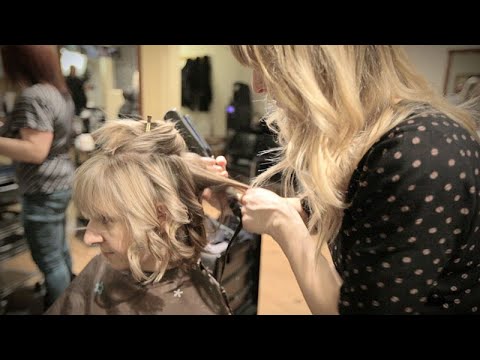
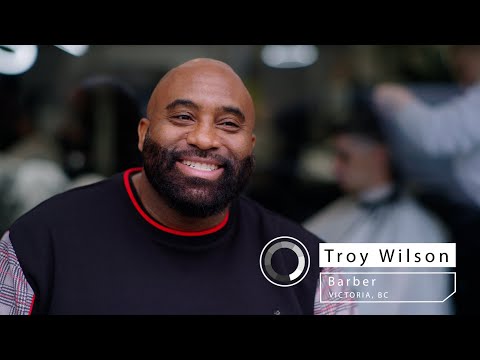
Watch the videos below to see what a day in the life of a hairstylist and a barber is like.
Watch the videos below to see what a day in the life of a hairstylist and a barber is like.