
Material handlers
Career Overview
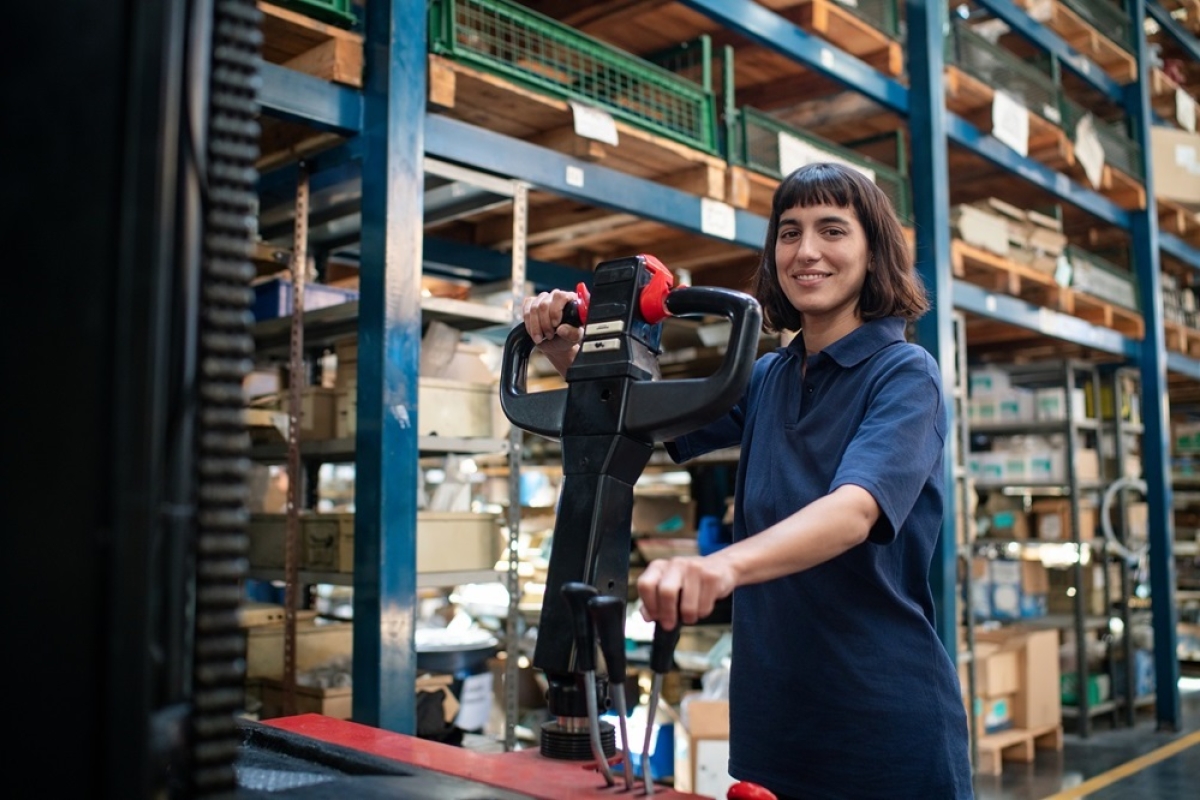
Material handlers move, handle, load and unload materials by hand or by using material handling equipment.
They work for transportation, storage and moving companies. People in this group may also work for manufacturing and processing companies, and retail and wholesale warehouses.
Job Titles
Duties
Material handlers (manual):
- Load, unload and move products and materials by hand or by using basic material handling equipment such as roller systems and dollies
- Move household appliances and furniture on and off moving trucks or vans
- Do other material handling work, such as counting, weighing, sorting, packing and unpacking
Material handlers (equipment operators):
- Run winches and other loading devices to load and unload materials on and off trucks, railway cars and loading docks of warehouses and other industrial businesses
- Operate industrial trucks, tractors, loaders and other equipment to transport materials to and from transportation vehicles and loading docks, and to store and retrieve materials in warehouses
- Connect hoses or pipes and operate equipment to load and unload liquid petroleum, chemicals or other products into or from tank trucks or storage tanks
- Operate equipment to move materials such as coal, ore and grain into or from railway cars, trucks or other vehicles
- Operate conveyors and equipment to transfer grain or other materials from transportation vehicles to elevators, bins or other storage areas
- May open containers and crates, fill warehouse orders, take inventory, and weigh and check materials
Earnings
Earnings is income that workers receive in exchange for their labour. Depending on the type of employment, earnings can be in the form of wages (hourly), salaries (fixed monthly or annual) or self-employed earnings.
Work Environment
# Workers Employed
27,800% Employed Full Time
53%Work takes place indoors and outdoors in a variety of weather conditions.
Equipment, instruments, machinery or power/hand tools may be a source of accident or injury. Workers may be exposed to toxic chemicals, noise and vibration.
Career Pathways
With additional training and experience, workers may progress into supervisory or management positions.
Occupational Interests
It’s important to understand what kinds of occupations align with your interests.
For more about occupational interests visit Skills for the Future Workforce > Characteristics.
Here are the top occupational interest(s) for this career profile:

Education, Training and Skills
Some secondary (high) school education may be required.
Physical strength is required for manual material handlers who work with heavy materials.
Those who operate machinery and equipment will need varied levels of training. Normally, the employer will provide this training—either in-house or through a third-party training facility.
Education programs in B.C.

Top Skills
Every job calls for a certain set of skills. Knowing those skills is the first step in finding a good career fit.
Here, you will find the 10 most relevant workplace skills. Some are more important to achieving success in a certain career than others. These skills may come naturally to you or you may need to gain them through education, training and experience.
See the list of work-related skills below, ranked in order of importance for this career. Check out the list and see if this career matches your skills—take that first step!

Giving full attention to what other people are saying, taking time to understand the points being made, asking questions as appropriate, and not interrupting at inappropriate times.

Talking to others to share information effectively.

Understanding written sentences and paragraphs in work-related documents.

Using logic and reasoning to identify the strengths and weaknesses of alternative solutions, conclusions or approaches to problems.

Being aware of others’ reactions and understanding why they react as they do.

Adjusting actions in relation to others' actions.

Keeping track of and assessing your performance, other individuals, or organizations to make improvements or take corrective action.

Considering the relative costs and benefits of potential actions to choose the most appropriate one.

Managing one’s own time and the time of others.

Communicating effectively in writing as appropriate for the needs of the audience.
Labour Market Statistics
Discover data, facts and information that have been gathered and analyzed. Learn about the characteristics of the economy and labour market in B.C.
Employment
Find out about employment types and trends by region and industry.
Employment
27,800Employment by Region

| Region | Employment | % Employment of this Occupation |
|---|---|---|
| Cariboo | 900 | 3.2% |
| Kootenay | 535 | 1.9% |
| Mainland/Southwest | 21,055 | 75.7% |
| North Coast and Nechako | 540 | 1.9% |
| Northeast | 275 | 1.0% |
| Thompson-Okanagan | 2,225 | 8.0% |
| Vancouver Island/Coast | 2,275 | 8.2% |
Labour Market Outlook
The B.C. Labour Market Outlook is a 10-year forecast of the expected supply and demand for labour in the province. It’s usually updated every year. The purpose is to provide British Columbians with the knowledge to make informed decisions on careers, skills training, education and hiring.
Forecasted Job Openings (2025-2035)
10,380Forecasted Job Openings
Forecasted Employment Growth Rate
Composition of Job Openings
Job Openings by Region (2025-2035)
| Region | Job Openings | Avg. Annual Employment Growth |
|---|---|---|
| Cariboo | 230 | -0.1% |
| Kootenay | 130 | 0.1% |
| Mainland/Southwest | 7,890 | 1.0% |
| North Coast and Nechako | 180 | 0.7% |
| Northeast | 100 | 0.6% |
| Thompson-Okanagan | 840 | 0.8% |
| Vancouver Island/Coast | 1,000 | 1.2% |
Industry Highlights
Learn about the opportunities in B.C.'s major industries, including employment trends, earning potential, locations of work and more.
Forecasted Job Openings by Industry
| Industry | Job Openings (2025-2035) |
|---|---|
| Professional, Scientific and Technical Services | 2,440 |
| Retail Trade | 2,050 |
| Transportation and Warehousing | 1,790 |
| Wholesale Trade | 1,510 |
| Manufacturing | 1,420 |
Insights from Industry
Many job openings become available as employees leave the occupation or move from one job to another.
Resources
-
LogisticsBClogisticsbc.ca/
-
WorkSafeBC – Warehousingwww.worksafebc.com/en/health-safety/industries/warehousing/