
Caroline: Stitching Together a New Career
“I had to resign from my position as a special education assistant … and I couldn’t return to that position after knee surgery. So, I decided to reinvent myself.”
After nearly 20 years working with special needs children, Caroline Heinrichs found herself at a turning point. While recovering from knee replacement surgery, she realized she could not return to her previous role and needed a new career path.
Through her local WorkBC Centre, she discovered the WorkBC Self-Employment Program, which helped turn her lifelong passion for quilting into a sustainable business.
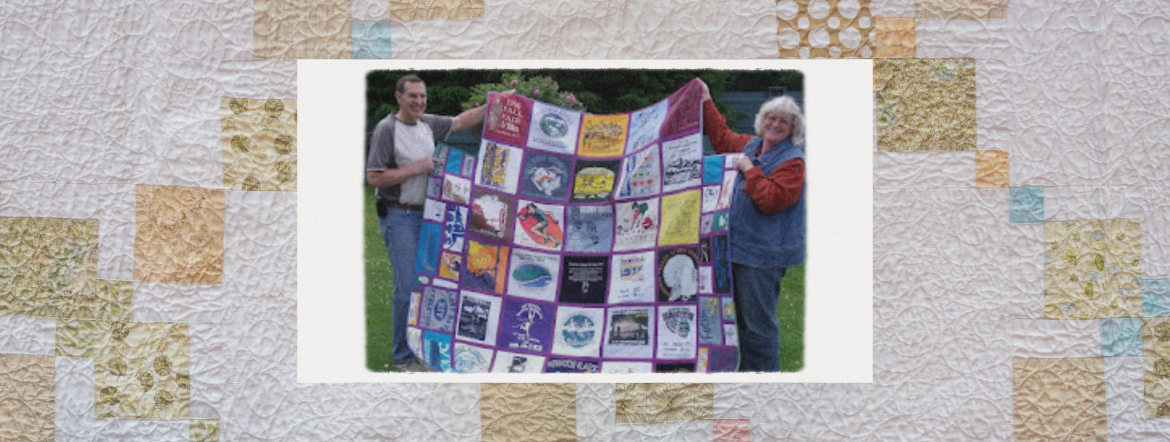
Today, through Good Earth Quilting, Caroline creates memory quilts that help families preserve meaningful stories, milestones and memories using clothing that might otherwise be tucked away or discarded.
Caroline first learned to quilt in Grade 8 after discovering one of her teachers was a quilter. She stayed after school to learn how to make her first piece and remembers the experience as “exciting as a 14-year-old kid.”
Although it would be years before she returned to quilting, she never stopped sewing. Over the years, she sold handmade clothing, took on mending work and developed a passion for extending the life of existing materials. Decades before the term “upcycling” became common, Caroline was transforming second-hand clothing into new garments and selling them in local shops.
While her sewing experience provided a strong foundation, Caroline credits the WorkBC Self-Employment Program with helping her turn those skills into a viable business.
Through the program, she participated in workshops designed to help aspiring entrepreneurs turn business ideas into reality. They helped her build a business plan, test the viability of her business concept and gain valuable training in marketing, networking, financial management, taxation and proposal writing.
The program also helped her explore ways to combine quilting with her experience as an educator.
“I was already comfortable with teaching,” Caroline said. “But I really wanted to know the difference between children and adults.” She didn’t just want to quilt, she wanted to teach.
With support from the program, Caroline spent four months refining her business proposal for both Good Earth Quilting and teaching adults about upcycling. Of the roughly 12 participants in the workshops, she was one of only three selected to receive funding. She used that support to earn her adult instruction diploma, giving her the credentials and the confidence to pursue both sides of her business.
Like many entrepreneurs, Caroline’s success did not happen overnight. At the time, many people were unfamiliar with memory quilts, and upcycling wasn’t widely embraced.
“It was like ‘Oh, she got all the stuff from the dump,’” Caroline said. “It’s the stigma that has taken a long time to overcome.”
Armed with the business skills and confidence she gained through the Self-Employment Program, Caroline stayed persistent. She networked, attended events and talked to people about her work. Over time, she found her niche creating memory quilts from meaningful clothing and fabrics.
“It can be a pillow. It can be a small portrait that you hang on the wall. It can be a whole bed size quilt.”
For Caroline, every project is personal.
“I don’t just see it as clothing. It comes from a person.”
Many clients bring her clothing that belonged to loved ones who have passed away, trusting her to transform those items into keepsakes they can treasure for years.
“It’s an honor to me to work with clothing that belonged to someone my client loves.”
Today, Caroline continues to grow Good Earth Quilting while working toward her goal of expanding the teaching side of the business.
“My overall goal was to combine the two. But I’ve remained diligent and hopeful.”
For anyone thinking about pursuing a passion or starting a small business, Caroline’s advice is simple:
“You have to just start.”
With support from the WorkBC Self-Employment Program, Caroline transformed years of experience and creativity into a business that reflects her values and supports her community. Today, Good Earth Quilting allows her to preserve meaningful memories for others while pursuing a career she loves.
Interested in starting your own business? Explore the Self-Employment page for information on what it’s like managing your own business and connect with a WorkBC Centre near you to learn more about programs and services that can support your next career move.