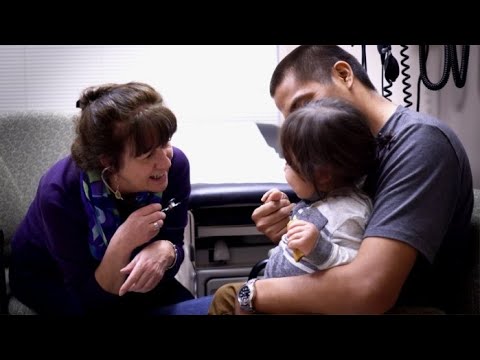
Nurse practitioners

 High opportunity occupation
Career Overview
Nurse practitioners are highly trained registered nurses who can provide care on their own, much like family doctors do for everyday health needs. They assess a person’s physical and mental health, decide on treatment plans and offer ongoing and preventative care, along with their regular nursing duties. Because of this advanced level of responsibility, they’re recognized as part of the medical staff within health authorities in a way other nursing roles aren’t.
Nurse practitioners can work with physicians, other nursing colleagues and healthcare providers as part of larger teams but can also work independently. Members of this group can work for community health care centres, hospitals, long-term care facilities and rehabilitation centres. They may specialize in primary healthcare or acute care.
Job Titles
Duties
Nurse practitioners can perform some or all the following duties:
- Act as a primary care provider similarly to a doctor
- Autonomously examine patients, take their medical histories and consult with physicians and other medical practitioners to evaluate patients’ physical and mental health
- Collaborate with members of an interdisciplinary health team such as family physicians, therapists and nutritionists
- Use best practice guidelines and evidence-based assessment tools to plan interventions in collaboration with families, patients and potentially
- Order laboratory tests, X-rays and other diagnostic procedures
- Clinically diagnose medical conditions
- Prescribe and administer treatment, including medication and vaccinations
- Coordinate or manage primary care
- Advise patients and their families on health care including health promotion, disease, illness and accident prevention
- Perform a patient advocacy role
- Complete medical certificates for involuntary admission under the Mental Health Act
- Complete disability, ICBC, WorkSafe BC and extended health benefit forms
- Consult with or make referrals to other health care professionals
- Provide Medical Assistance in Dying
Earnings
Earnings is income that workers receive in exchange for their labour. Depending on the type of employment, earnings can be in the form of wages (hourly), salaries (fixed monthly or annual) or self-employed earnings.
Work Environment
# Workers Employed
665% Employed Full Time
62%Nurse practitioners work in community health centres, hospitals, clinics, long-term care facilities, Indigenous primary care clinics and rehabilitation centres. They can serve on primary care service contracts, typically with hospitals, pharmacies and similar facilities, or as employees of provincial health authorities.
They can also work in a variety of specialized care wards within healthcare facilities, including but not limited to:
- Acute care including cardiology, neurology, geriatrics, emergency departments, orthopedics, internal medicine and more
- Cancer care including radiation and medical oncology, pain and symptom management programs and more
- Specialized outpatient clinics such as cardiac clinics, chronic pain clinics, HIV clinics and more
- Pediatrics including acute and community-based programs such as neonatal units, Intensive Care Units (ICUs), orthopedics, asthma clinics, emergency departments, pediatric oncology and more
- Long term care and rehabilitation centers
- Correctional health services
- Medical Assistance in Dying (MAiD) services
Members of this group use lifting devices to lift and move patients. Working in healthcare settings exposes members of this group to potential contagious illness. Nurse practitioners must frequently interact with patients and their families in emotional, stressful situations. They follow safety procedures to reduce the risk of workplace injuries and illness.
New technologies and policies have resulted in a larger proportion of day surgeries and outpatient procedures and fewer admissions for longer stays. This has increased the workloads of nurse practitioners. The shortage of doctors has also increased the demand for nurse practitioners to handle less intense medical matters and increased the pressure on the workdays of nurse practitioners.
Career Pathways
Nurse practitioners typically find employment with healthcare facilities, including hospitals, clinics and community health centres. Depending on specialty, a nurse practitioner might also find employment in mental health facilities, operating rooms, retirement homes or other sorts of medical facilities. A recent development is the employment of nurse practitioners in pharmacies, where they diagnose and treat simple conditions, provide vaccinations and otherwise provide basic medical care in the absence of a primary care physician.
Nurse practitioners can train or build a variety of specializations, usually based on the clinical settings in which they’d like to work or on their experience working in these settings. Additional training is almost always necessary to change specializations. Although specializations can be useful for gaining access to new or expanded roles, nurse practitioners must often advocate with their employers to create these roles for them and provide the necessary training or experience.
Experienced nurse practitioners can progress to supervisory and managerial positions, including as preceptors as part of the education of new registered nurses. Other leadership roles include professional development through mentorship of new NPs, preceptorship of students, community leadership by collaborating with community and government organizations, clinical leadership and contributions to research.
Occupational Interests
It’s important to understand what kinds of occupations align with your interests.
For more about occupational interests visit Skills for the Future Workforce > Characteristics.
Here are the top occupational interest(s) for this career profile:


Education, Training and Skills
Nurse practitioners must become registered nurses and then gain additional qualifications to become nurse practitioners.
This means that aspiring nurse practitioners must:
- Complete secondary school with appropriate English, math and science courses for admission to a nursing program
- Complete a recognized college or university registered nursing program, which is typically a bachelor’s degree and includes a preceptorship/mentorship arrangement with an existing nurse practitioner
- Pass the Canadian Registered Nurse Exam and become licensed as a registered nurse
- Complete a Master of Science in Nursing or a doctoral degree in nursing or a similar program
Registration with a regulatory body is required for nurse practitioners in all provinces and territories. In B.C., this authority is the British Columbia College of Nurses and Midwives (BCCNM).
Nurse practitioners can also gain additional training or experience to specialize in specific areas of nursing. The Canadian Nursing Association (CNA) offers a voluntary certification program that allows registered nurses to write a national exam in one of 20 areas of specialization. For a list of these programs, visit the CNA website.
Nurse practitioners who are certified for that occupation by a regulator elsewhere in Canada can apply for the same certification from the regulator in B.C. Under the terms of the Canadian Free Trade Agreement (CFTA), most applicants who are transferring their credentials from elsewhere in Canada will not be required to complete additional training or testing. However, the B.C. regulator may ask applicants to provide further information such as a letter of good standing, references, or criminal record check.
For information about labour mobility in Canada, visit www.workersmobility.ca.
For those who trained outside of Canada and never received certification from any Canadian jurisdiction, a full assessment is likely needed. Most occupational regulators have a process for assessment and recognize internationally trained applicants.
Contact the British Columbia College of Nursing Professionals for details on how to apply for certification in B.C.
View a list of Professional Regulatory Authorities in B.C.
Education programs in B.C.

Top Skills
Every job calls for a certain set of skills. Knowing those skills is the first step in finding a good career fit.
Here, you will find the 10 most relevant workplace skills. Some are more important to achieving success in a certain career than others. These skills may come naturally to you or you may need to gain them through education, training and experience.
See the list of work-related skills below, ranked in order of importance for this career. Check out the list and see if this career matches your skills—take that first step!

Giving full attention to what other people are saying, taking time to understand the points being made, asking questions as appropriate, and not interrupting at inappropriate times.

Understanding written sentences and paragraphs in work-related documents.

Using logic and reasoning to identify the strengths and weaknesses of alternative solutions, conclusions or approaches to problems.

Talking to others to share information effectively.

Keeping track of and assessing your performance, other individuals, or organizations to make improvements or take corrective action.

Understanding how new information could be used to solve current and future problems in making decisions.

Considering the relative costs and benefits of potential actions to choose the most appropriate one.

Being aware of others’ reactions and understanding why they react as they do.

Being able to solve novel, ill-defined problems in complex, real-world settings.

Actively looking for ways to help people.
Labour Market Statistics
Discover data, facts and information that have been gathered and analyzed. Learn about the characteristics of the economy and labour market in B.C.
Employment
Find out about employment types and trends by region and industry.
Employment
665Employment by Region

| Region | Employment | % Employment of this Occupation |
|---|---|---|
| Cariboo | 25 | 3.8% |
| Kootenay | 20 | 3.0% |
| Mainland/Southwest | 375 | 56.4% |
| North Coast and Nechako | 10 | 1.5% |
| Northeast | 0 | 0.0% |
| Thompson-Okanagan | 95 | 14.3% |
| Vancouver Island/Coast | 135 | 20.3% |
Labour Market Outlook
The B.C. Labour Market Outlook is a 10-year forecast of the expected supply and demand for labour in the province. It’s usually updated every year. The purpose is to provide British Columbians with the knowledge to make informed decisions on careers, skills training, education and hiring.
Forecasted Job Openings (2025-2035)
420Forecasted Job Openings
Forecasted Employment Growth Rate
Composition of Job Openings
Job Openings by Region (2025-2035)
| Region | Job Openings | Avg. Annual Employment Growth |
|---|---|---|
| Cariboo | 20 | 1.6% |
| Kootenay | 20 | 2.2% |
| Mainland/Southwest | 240 | 2.2% |
| North Coast and Nechako | Not available | Not available |
| Northeast | Not available | Not available |
| Thompson-Okanagan | 50 | 2.1% |
| Vancouver Island/Coast | 90 | 2.2% |
Industry Highlights
Learn about the opportunities in B.C.'s major industries, including employment trends, earning potential, locations of work and more.
Forecasted Job Openings by Industry
| Industry | Job Openings (2025-2035) |
|---|---|
| Health Care and Social Assistance | 410 |
Insights from Industry
The combination of a shortage of primary care physicians and a growing and aging population has dramatically increased demand for nurse practitioners, alongside an increased need for health services more broadly. Demand has been high across the province and remains acute in northern and rural regions. With the increased supply of new nursing graduates and the advancements in professional development, the profession has become more stable in recent years. Still, nurse practitioners continue to represent the fastest-growing nursing designation both in demand and in supply and is unlikely to change, as healthcare providers are increasingly structuring their systems around this role.
To address these shortfalls, the B.C. government has committed funding for health services and facilities year over year, which help fund new job openings for nurse practitioners. Additionally, the B.C. government has created additional training spaces in public post-secondary institutions and offered loan forgiveness for nursing graduates who commit to working in underserved regions of the province. However, the intense competitiveness of nursing education and lack of experienced nurse practitioners willing and able to serve as preceptors to help train new nurse practitioners remains a bottleneck.
Resources
-
British Columbia College of Nurses and Midwives (BCCNM)www.bccnm.ca/Pages/Default.aspx
-
B.C. Ministry of Healthwww.gov.bc.ca/health
-
BC Nurses’ Union (BCNU)www.bcnu.org
-
Canadian Federation of Nurses Unions (CFNU)nursesunions.ca
-
Canadian Nurses Association (CNA)www.cna-aiic.ca/en
-
Nurses and Nurse Practitioners of British Columbia (NNPBC)www.nnpbc.com
-
BC Health Careers – Nurse Practitionersbchealthcareers.ca/professions/nurse-practitioners/
-
HealthLink BCwww.healthlinkbc.ca/find-care/nurse-practitioners
Career Videos
Watch the video below to see what a day in the life of a nurse practitioner is like.
Watch the video below to see what a day in the life of a nurse practitioner is like.