Registered nurses and registered psychiatric nurses

 High opportunity occupation
Career Overview
Registered nurses (RNs) and registered psychiatric nurses (RPNs) provide nursing care to patients, clients and those in long-term care. Although job postings and search results may use numerous job titles for this group, the official job titles are “registered nurse” and “registered psychiatric nurse” with associated specialties.
Job Titles
Duties
In general, registered nurses (RNs) and registered psychiatric nurses (RPNs):
- Provide nursing services for the promotion, maintenances and restoration of health and the prevention of illness
- Assess patients to identify proper treatments
- Act as patient advocate and advocate for healthcare improvements
- Consult with patients and their families
- Coordinate care with interdisciplinary heath teams
- Give medications and treatments
- Monitor patients for changes
- Document nursing care, observations, patients’ concerns and medications
- Check and operate medical equipment
- Teach patients and their caregivers about self-care
- Co-ordinate with other health services to ensure continuity of care
- Deliver health education programs and promote health and wellness
- Perform complex psychomotor tasks such as removing surgical drains, chest tubes, nasogastric tubes, and intravenous catheters
- Collect specimens for serology, as well as culture and sensitivity testing
Some RNs and RPNs assist in surgeries and other procedures. They can also help in planning for patient release. In addition, they can supervise or mentor other nursing staff, students or new employees.
Specific types of nurses have additional duties:
Registered psychiatric nurses care for people with mental health and addiction issues. In hospitals, registered psychiatric nurses can also specialize in forensic psychiatry, emergency mental health, crisis stabilization, eating disorders, child and youth mental health, addictions and withdrawal management, developmental disabilities, mental health for the elderly, or for women who are pregnant or have recently given birth.
Registered nurses in hospitals can specialize in surgery, critical care, maternity, pediatrics, geriatrics, psychiatry or emergency room care.
Long-term care nurses develop care plans and manage and direct nursing care for patients in long-term care.
Community health nurses travel to schools, businesses, community health centres, patients’ homes and other sites to provide direct care. In addition, they work on illness prevention and health education, and support individuals, families and community groups.
Agency nurses in private agencies often work directly for families on a contract basis. They may also work for nursing or temporary help agencies that assign them to patients or work locations.
Outpatient clinic and outpatient office nurses work with doctors in doctors’ offices, clinics and emergency medical centres. They do initial assessments, routine lab tests, exams and paperwork. They also give injections and medications, dress wounds and incisions, and help with minor surgery. RPNs who work in outpatient clinics and offices help patients with mental health and addiction issues.
Occupational health nurses care for minor injuries and illnesses at worksites. They also provide emergency care, prepare accident reports and arrange for further care as needed. In addition, they offer health counselling, perform exams, give vaccines and work on accident-prevention programs. RPNs in this position focus on job-related mental health.
Nursing consultants work as independent advisors to organizations. They may also develop education programs.
Nursing researchers may be self-employed, or they may work for hospitals, public or private organizations, or government. Their research helps determine the best health outcomes for patients and shapes health policies.
Clinical nurse specialists and clinical resource nurses are experts in a specific field of nursing. They lead and advise nursing staff in dealing with patients needing special care. They work in a range of healthcare settings including hospitals, clinics and acute care facilities.
The workload and complexity of nursing roles is increasing. Nurses now often experience an expanded scope of practice, a larger number of simultaneous patients and more responsibility than in previous generations.
Earnings
Earnings is income that workers receive in exchange for their labour. Depending on the type of employment, earnings can be in the form of wages (hourly), salaries (fixed monthly or annual) or self-employed earnings.
Work Environment
# Workers Employed
43,690% Employed Full Time
57%Registered nurses (RNs) and registered psychiatric nurses (RPNs) can work in hospitals, long-term care facilities, primary care clinics, urgent care clinics, private practices, schools, people’s homes or the larger community. They may work on their own or as members of a healthcare team. Some nurses are self-employed.
Hours and schedules depend on the workplace. In hospital settings, nurses usually work eight- to 12-hour shifts on rotation, including weekends, evenings, nights and holidays. In other settings, nurses might work 9–5 or 8–4 Monday to Friday, and nurses associated with schools may work other hours. Full-time nurses work an average of 37.5 hours each week. Others work part time or in casual positions without set hours, filling in as needed.
Nurses need to be able to multi-task and handle stress well in a complex and fast-paced environment. Nurses frequently encounter stressful emotional situations involving people in significant distress and must cope with the emotional aspects of working with the sick, injured and terminally ill as well as their families. They must be able to perform complex motor tasks such as removing surgical drains, nasogastric feeding tubes, and similar medical devices safely. They use equipment to lift and move patients. In all cases, safety precautions and equipment are required to avoid injury.
Nurses must continue to learn and adapt to changes that affect their work. These can include the rise of new diseases and the legalization of certain drugs. Technology is also changing the way nurses do their job. Increasingly, nurses work remotely, providing tele-health, and the use of electronic health records is changing all medical practices. Documentation methods have also advanced.
New technologies and policies, such as the increase in day surgeries and shorter hospital stays, are also increasing nursing workloads.
Career Pathways
New registered nurses usually begin in entry-level new graduate nurse positions, which are typically not full-time, for approximately 7–8 months. These positions are often in acute care, public health, community settings or other areas of nursing experiencing staff shortages. As a result, it is currently challenging for a new graduate nurse to take a permanent part-time position or obtain casual employment. This is a provincial policy rolled out through all the major health authorities.
RNs with additional certification can specialize in areas such as emergency care, oncology, psychiatric care, critical care, pediatrics, geriatrics, palliative care, rehabilitation or occupational health. With experience and more education, RNs can become nurse educators, nurse managers, care coordinators, clinical nurse specialists or nurse practitioners. They can also pursue specialty certification through the Canadian Nurses Association and work towards becoming a clinical nurse specialist. Nurses can also complete specialty education to work in specific settings such as the operating room, post-anesthetic recovery, maternity, and critical care.
RPNs with additional experience or education can specialize in forensic psychiatry, emergency mental health, crisis stabilization, eating disorders, child and youth mental health, withdrawal management or developmental disabilities.
RNs and RPNs with experience and additional courses may move on to supervisory and managerial positions. They often become team leaders or patient care co-ordinators. They may also progress to roles such as manager and clinical lead, program manager, nurse manager, director of care, dean of nursing, lead researcher, professional practice lead, or assistant, associate or professor of nursing.
Occupational Interests
It’s important to understand what kinds of occupations align with your interests.
For more about occupational interests visit Skills for the Future Workforce > Characteristics.
Here are the top occupational interest(s) for this career profile:

Education, Training and Skills
Registered nurses and registered psychiatric nurses must:
- Complete a registered nursing or registered psychiatric nursing program recognized by the British Columbia College of Nurses and Midwives (BCCNM)
- Complete a bachelor’s degree in nursing or psychiatric nursing OR a two-year bridging program if they already have some postsecondary education, as appropriate
- Pass the National Council Licensure Examination (NCLEX) or Registered Psychiatric Nurses of Canada Examination (RPNCE)
- Meet the registration requirements set out by BCCNM
To specialize, nurses may need additional experience or schooling. Increasingly, nursing students, especially in the Lower Mainland, take specialty courses while doing their undergraduate programs. This gives them an advantage when seeking their first job. The Canadian Nurses Association (CNA) offers a voluntary certification program that allows registered nurses to write a national exam in one of 22 areas of specialization. Experience elsewhere in the healthcare system, such as time spent as a personal support worker, healthcare assistant, or volunteer in a healthcare setting is an asset when applying for nursing programs.
Clinical nurse specialists and nurse managers must have a master’s degree in nursing, or equivalent experience and education. Nursing professors and nursing researchers need a doctoral degree.
Registered nurses and registered psychiatric nurses who are certified for that occupation by a regulator elsewhere in Canada can apply for the same certification from the regulator in B.C. Under the terms of the Canadian Free Trade Agreement (CFTA), most applicants who are transferring their credentials from elsewhere in Canada will not be required to complete additional training or testing. However, the B.C. regulator may ask applicants to provide further information such as a letter of good standing, references, or criminal record check.
For those who trained outside of Canada and never received certification from any Canadian jurisdiction, a full assessment is likely needed. Most occupational regulators have a process for assessment and recognize internationally trained applicants.
Contact the British Columbia College of Nurses and Midwives (BCCNM) for details on how to apply for certification in B.C.
For information about labour mobility in Canada, visit www.workersmobility.ca.
View a list of Professional Regulatory Authorities in B.C.
Education programs in B.C.

Top Skills
Every job calls for a certain set of skills. Knowing those skills is the first step in finding a good career fit.
Here, you will find the 10 most relevant workplace skills. Some are more important to achieving success in a certain career than others. These skills may come naturally to you or you may need to gain them through education, training and experience.
See the list of work-related skills below, ranked in order of importance for this career. Check out the list and see if this career matches your skills—take that first step!

Giving full attention to what other people are saying, taking time to understand the points being made, asking questions as appropriate, and not interrupting at inappropriate times.

Being aware of others’ reactions and understanding why they react as they do.

Using logic and reasoning to identify the strengths and weaknesses of alternative solutions, conclusions or approaches to problems.

Talking to others to share information effectively.

Understanding written sentences and paragraphs in work-related documents.

Actively looking for ways to help people.

Keeping track of and assessing your performance, other individuals, or organizations to make improvements or take corrective action.

Adjusting actions in relation to others' actions.

Considering the relative costs and benefits of potential actions to choose the most appropriate one.

Understanding how new information could be used to solve current and future problems in making decisions.
Labour Market Statistics
Discover data, facts and information that have been gathered and analyzed. Learn about the characteristics of the economy and labour market in B.C.
Employment
Find out about employment types and trends by region and industry.
Employment
43,690Employment by Region

| Region | Employment | % Employment of this Occupation |
|---|---|---|
| Cariboo | 1,390 | 3.2% |
| Kootenay | 1,240 | 2.8% |
| Mainland/Southwest | 25,890 | 59.3% |
| North Coast and Nechako | 660 | 1.5% |
| Northeast | 395 | 0.9% |
| Thompson-Okanagan | 6,020 | 13.8% |
| Vancouver Island/Coast | 8,095 | 18.5% |
Labour Market Outlook
The B.C. Labour Market Outlook is a 10-year forecast of the expected supply and demand for labour in the province. It’s usually updated every year. The purpose is to provide British Columbians with the knowledge to make informed decisions on careers, skills training, education and hiring.
Forecasted Job Openings (2025-2035)
28,440Forecasted Job Openings
Forecasted Employment Growth Rate
Composition of Job Openings
Job Openings by Region (2025-2035)
| Region | Job Openings | Avg. Annual Employment Growth |
|---|---|---|
| Cariboo | 850 | 1.6% |
| Kootenay | 790 | 2.1% |
| Mainland/Southwest | 17,500 | 2.1% |
| North Coast and Nechako | 230 | 1.3% |
| Northeast | 200 | 1.2% |
| Thompson-Okanagan | 3,070 | 2.2% |
| Vancouver Island/Coast | 5,800 | 2.1% |
Industry Highlights
Learn about the opportunities in B.C.'s major industries, including employment trends, earning potential, locations of work and more.
Forecasted Job Openings by Industry
| Industry | Job Openings (2025-2035) |
|---|---|
| Health Care and Social Assistance | 27,890 |
| Public Administration | 180 |
| Professional, Scientific and Technical Services | 80 |
| Repair, Personal and Non-Profit Services | 70 |
| Educational Services | 70 |
Insights from Industry
As B.C.’s population grows and ages, the demand for nurses is rising. Canadian credentials for registered nurses (RNs) and registered psychiatric nurses (RPNs) are also accepted around the world. Nurses with specialty skills, such as acute care, medical-surgical and mental health expertise are in especially high demand.
The need for RNs and RPNs is high across the province, especially in the northern and rural regions. To help boost the supply of nurses, post-secondary institutions have opened more training spaces. In addition, the B.C. government will forgive the student loans of graduates who take jobs in regions with the greatest demand, such as the Mainland/Southwest.
Resources
-
B.C. Ministry of Healthwww.gov.bc.ca/health
-
BC Nurses’ Union (BCNU)www.bcnu.org
-
BCNU – Update Magazinewww.bcnu.org/news-and-events/update-magazine
-
British Columbia College of Nurses and Midwives (BCCNM)www.bccnm.ca/Pages/Default.aspx
-
Canadian Federation of Nurses Unions (CFNU)nursesunions.ca
-
Canadian Nurses Association (CNA)www.cna-aiic.ca/en
-
First Nations Health Authoritywww.fnha.ca
-
Fraser Healthwww.fraserhealth.ca/
-
Health Match BCwww.healthmatchbc.org/
-
Interior Health – Jobsjobs.interiorhealth.ca/
-
Island Healthwww.islandhealth.ca/
-
Northern Health – Careerscareers.northernhealth.ca/
-
Nurses and Nurse Practitioners of British Columbia (NNPBC)www.nnpbc.com
-
Provincial Health Services Authority (PHSA) – Jobsjobs.phsa.ca/
-
Vancouver Coastal Health (VCH)www.vch.ca/
Career Videos
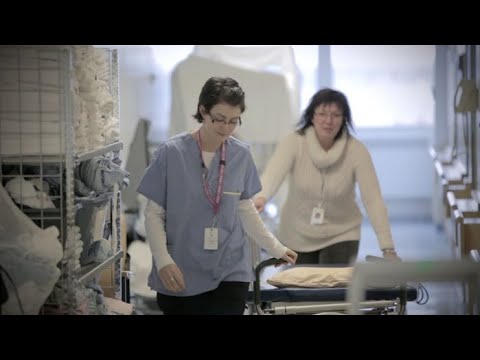
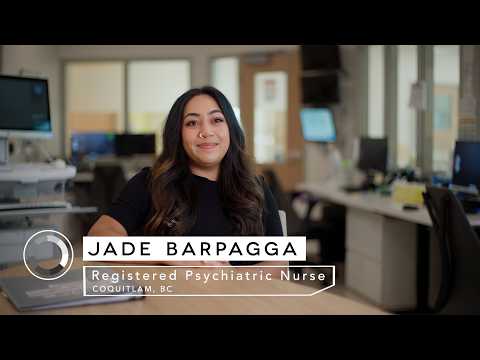
Watch the video below to see what a day in the life of a registered nurse is like.
Watch the video below to see what a day in the life of a registered nurse is like.