Medical laboratory technologists

 High opportunity occupation
Career Overview
Medical laboratory technologists conduct medical laboratory tests, experiments and analyses to assist in the diagnosis, treatment and prevention of disease. This group also includes medical laboratory technologists who supervise the work of others. Work in this group is detail-oriented and based on strict procedures. It requires being able to work both independently and as part of a team, with solid interpersonal and communication skills as well as laboratory skills.
Job Titles
Duties
Medical laboratory technologists can specialize in specific areas, such as clinical chemistry, clinical microbiology, hematology, histotechnology, transfusion science, or immunohematology, diagnostic cytology and molecular diagnostics. Workers perform various combinations of the duties described below.
- Set up, operate and maintain laboratory equipment
- Do chemical analyses of blood, urine, cerebrospinal fluid or other body fluids
- Study blood cells and other tissues to determine their relation to various physiological and pathological conditions
- Prepare tissue sections to demonstrate special cellular tissue elements or other characteristics for microscopic examination
- Establish procedures for the analysis of specimens and for medical laboratory experiments
- Do blood group, type and compatibility tests for transfusion purposes
- Validate, document and report test results
- Conduct quality control assessment of testing techniques
- Supervise and train other medical laboratory technical staff, students and helpers
- Assist pathologists during autopsies
The duties of medical laboratory technologists frequently shift due to technological changes, including emergence of new medical tests and classes of equipment that technologists are then expected to use, calibrate and maintain.
Earnings
Earnings is income that workers receive in exchange for their labour. Depending on the type of employment, earnings can be in the form of wages (hourly), salaries (fixed monthly or annual) or self-employed earnings.
Work Environment
# Workers Employed
2,535% Employed Full Time
70%Medical laboratory technologists work in many settings including medical laboratories in hospitals, blood banks, community and private clinics, research facilities and post-secondary educational institutions.
Most medical technologists typically work 35–40 hours per week. Working hours vary depending on the type of laboratory. Those working in diagnostic clinical laboratories or hospitals can work rotating shifts of days, evenings and nights, including weekends and holidays. Medical technologists in research laboratories usually work regular weekday hours.
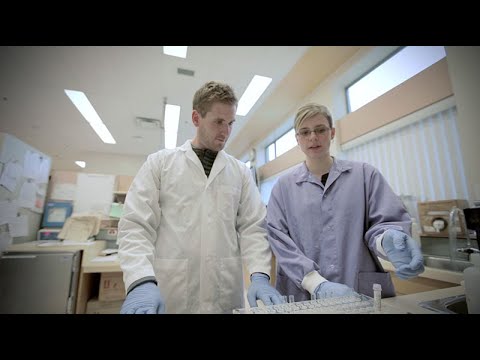
Work takes place in bright, well-ventilated laboratories. During their workday, workers can perform a variety of tests or repeat the same tests throughout the day. They use solutions and reagents for their work which can have unpleasant odours or pose health risks. Similarly, members of this group can encounter infectious patients and hazardous chemicals. These dangers mean various safety precautions, including personal protective equipment (PPE), are part of life for medical laboratory technologists.
Because of the ever-evolving nature of the tests and devices a medical laboratory technologist might encounter, the environment of this group also evolves.
Career Pathways
Medical laboratory technologists usually start their careers with entry-level positions, whether with their preferred specialty during training or with whatever option is available. Experience and/or training in management, project management, laboratory information systems (LIS), IT support, and similar fields can open advancement opportunities. Medical laboratory technologists typically advance to managerial or supervisory roles over time, but can also become representatives of laboratory equipment vendors or take on roles in regulation.
Occupational Interests
It’s important to understand what kinds of occupations align with your interests.
For more about occupational interests visit Skills for the Future Workforce > Characteristics.
Here are the top occupational interest(s) for this career profile:


Education, Training and Skills
Medical laboratory technologists training is regulated by the Canadian Association of Medical Laboratory Professionals Regulators (CAMLPR) and typically starts with a CAMLPR-approved diploma program. Students with other educational backgrounds, such as internationally trained medical laboratory technologists, medical laboratory technologists educated in provinces or territories where this certification is not required and people making career pivots, can instead seek a Prior Learning Assessment (PLA) from CAMLPR to determine if they have the required knowledge base. After either path, the next step is a CAMLPR Fields-of-Practice exam, which the vast majority of potential employers of medical laboratory technologists require.
Starting in 2027, medical laboratory technologists in B.C. will be regulated under and required to register with the College of Physicians and Surgeons of British Columbia (CPSBC) to practice in B.C. At that time, CAMLPR certification will become mandatory. Registration with a regulatory body is also mandatory in Alberta, Manitoba, Ontario New Brunswick, Newfoundland and Labrador, Nova Scotia and Prince Edward Island.
Medical laboratory technologists in B.C. were previously regulated by the Canadian Society for Medical Laboratory Science (CSMLS). Students partially assessed by the CSMLS must switch to the CAMLPR pathway using the procedures on this page. For more information about this transition period, see CSMLS’s resources.
Additional skills can make a medical laboratory technologist more enticing to potential employers or facilitate advancement opportunities. These include quality management, project management, infection control, safety, training in emerging technologies, and computer or information technology (IT) skills.
For information about labour mobility in Canada, visit www.workersmobility.ca.
View a list of Professional Regulatory Authorities in B.C.
Education programs in B.C.

Top Skills
Every job calls for a certain set of skills. Knowing those skills is the first step in finding a good career fit.
Here, you will find the 10 most relevant workplace skills. Some are more important to achieving success in a certain career than others. These skills may come naturally to you or you may need to gain them through education, training and experience.
See the list of work-related skills below, ranked in order of importance for this career. Check out the list and see if this career matches your skills—take that first step!

Understanding written sentences and paragraphs in work-related documents.

Giving full attention to what other people are saying, taking time to understand the points being made, asking questions as appropriate, and not interrupting at inappropriate times.

Using logic and reasoning to identify the strengths and weaknesses of alternative solutions, conclusions or approaches to problems.

Talking to others to share information effectively.

Communicating effectively in writing as appropriate for the needs of the audience.

Considering the relative costs and benefits of potential actions to choose the most appropriate one.

Keeping track of and assessing your performance, other individuals, or organizations to make improvements or take corrective action.

Being able to solve novel, ill-defined problems in complex, real-world settings.

Understanding how new information could be used to solve current and future problems in making decisions.

Managing one’s own time and the time of others.
Labour Market Statistics
Discover data, facts and information that have been gathered and analyzed. Learn about the characteristics of the economy and labour market in B.C.
Employment
Find out about employment types and trends by region and industry.
Employment
2,535Employment by Region

| Region | Employment | % Employment of this Occupation |
|---|---|---|
| Cariboo | 65 | 2.6% |
| Kootenay | 65 | 2.6% |
| Mainland/Southwest | 1,715 | 67.5% |
| North Coast and Nechako | 40 | 1.6% |
| Northeast | 10 | 0.4% |
| Thompson-Okanagan | 280 | 11.0% |
| Vancouver Island/Coast | 360 | 14.2% |
Labour Market Outlook
The B.C. Labour Market Outlook is a 10-year forecast of the expected supply and demand for labour in the province. It’s usually updated every year. The purpose is to provide British Columbians with the knowledge to make informed decisions on careers, skills training, education and hiring.
Forecasted Job Openings (2025-2035)
1,840Forecasted Job Openings
Forecasted Employment Growth Rate
Composition of Job Openings
Job Openings by Region (2025-2035)
| Region | Job Openings | Avg. Annual Employment Growth |
|---|---|---|
| Cariboo | 40 | 1.8% |
| Kootenay | 50 | 2.2% |
| Mainland/Southwest | 1,270 | 2.2% |
| North Coast and Nechako | 20 | 1.8% |
| Northeast | Not available | Not available |
| Thompson-Okanagan | 170 | 2.2% |
| Vancouver Island/Coast | 290 | 2.1% |
Industry Highlights
Learn about the opportunities in B.C.'s major industries, including employment trends, earning potential, locations of work and more.
Forecasted Job Openings by Industry
| Industry | Job Openings (2025-2035) |
|---|---|
| Health Care and Social Assistance | 1,810 |
| Professional, Scientific and Technical Services | 20 |
Insights from Industry
Industry sources report a current shortage of medical laboratory technologists in B.C., which is expected to continue in the coming years. The COVID-19 pandemic revealed the need to dramatically increase the number of medical laboratory technologists in B.C., leading to an increase in job openings through growth of this field overall. This is in addition to job openings to replace retiring workers. Shortages are especially acute in remote and rural areas, whose aging populations require more healthcare services per capita than those of other parts of B.C.
The growing demand for healthcare services will increase job opportunities for medical laboratory technologists, especially those who perform clinical genetics testing. In particular, hospitals and medical laboratories that provide contracted diagnostic services are expected to experience growth that will create new job opportunities. Other specialties, such as diagnostic cytology technologists, are expected to shrink due to automation.
The introduction of simplified tests for routine diagnoses allow doctors and, in some cases, patients to carry out some tests themselves, which has reduced the number of medical technologists. However, the development of new diagnostic tests now requested by physicians has balanced this effect by increasing job opportunities.
Resources
-
B.C. Ministry of Healthwww.gov.bc.ca/health/
-
BC Biomedical Laboratorieswww.bcbio.com/
-
BC Provincial Blood Coordinating Officewww.pbco.ca/
-
British Columbia Society of Laboratory Science (BCSLS)www.bcsls.net/
-
Canadian Blood Servicesblood.ca/
-
Canadian Blood Services – Job Seekersblood.ca/en/job-seekers
-
Canadian Medical Association (CMA)www.cma.ca/
-
Canadian Society for Medical Laboratory Science (CSMLS)www.csmls.org/
-
Fraser Healthwww.fraserhealth.ca/
-
Health Match BCwww.healthmatchbc.org/
-
Interior Health – Jobsjobs.interiorhealth.ca/
-
Island Healthwww.islandhealth.ca/
-
Northern Health – Careerscareers.northernhealth.ca/
-
Provincial Health Services Authoritywww.phsa.ca/
-
Vancouver Coastal Health (VCH)www.vch.ca/
-
Canadian Association of Medical Laboratory Professionals Regulators (CAMLPR)camlpr.org/become-an-mlt/
Career Videos
Watch the Career Trek videos and see what it's like to work in these careers.
Watch the Career Trek videos and see what it's like to work in these careers.