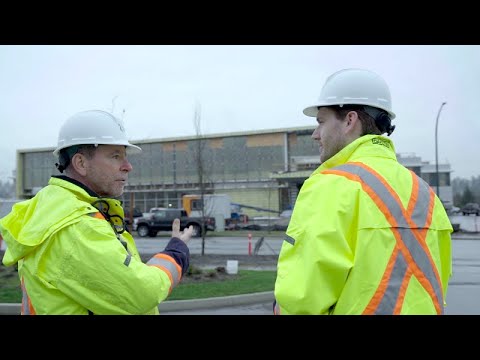
Occupational health and safety specialists
Career Overview
Occupational health and safety specialists:
- Review, evaluate and monitor health and safety hazards
- Develop strategies to prevent, control and eliminate accidents and occupational injuries
- Inspect workplace environments, equipment and practices to ensure compliance with organization and government environment, health and safety standards and regulations
- Promote both physical and psychological health and safety through risk identification, prevention strategies and supportive workplace practices
- Work throughout the public and private sectors
Job Titles
Duties
Occupational health and safety specialists perform some or all of the following duties:
- Lead workplace audits and investigations of safety concerns, incidents and accidents
- Conduct hazard identification, risk assessments and exposure evaluations to prioritize and control workplace risks
- Lead workplace inspections to ensure that equipment, materials and production processes do not present a safety or health hazard to employees
- Promote psychological health and safety by identifying psychosocial hazards and supporting mentally healthy, respectful and inclusive work environments
- Develop health and safety programs, including standard operating procedures, policies and training to mitigate risk, optimize worker’s health and safety and foster a positive occupational health and safety culture
- Initiate enforcement procedures on workplaces contravening organization and government health and safety standards and regulations
- Provide training to employers, employees and the public on issues of workplace safety
- Communicate, engage and influence decision-makers and workers to ensure compliance with health and safety legislation and regulations
Earnings
Earnings is income that workers receive in exchange for their labour. Depending on the type of employment, earnings can be in the form of wages (hourly), salaries (fixed monthly or annual) or self-employed earnings.
Work Environment
# Workers Employed
2,475% Employed Full Time
70%Work in this occupation is typically performed in structured indoor environments or outdoor worksites where workers may be exposed to varying weather conditions and a range of safety and health hazards.
These may include occupational health hazards such as exposure to chemicals that can endanger health through inhalation, absorption, ingestion or contact with skin or eyes, as well as risks of fire or explosion. Workers may also be exposed to infectious bacteria, viruses, or other biological agents through direct or indirect contact with contaminated materials.
Additional occupational health hazards can include ionizing radiation (such as X-rays and radioactive substances), non-ionizing radiation (such as radio frequencies, infrared, ultraviolet, or visible light), excessive noise that may lead to hearing loss, and thermal stress from hot or cold environments that can affect physical health.
In addition to occupational health hazards, workers may be exposed to occupational safety hazards related to the physical work environment and job tasks. These can include moving machinery, tools, vehicles, and equipment that present risks of physical injury; working at heights or on uneven surfaces that increase the risk of falls; and other physical hazards that may result in acute injuries such as cuts, fractures or crush injuries.
Career Pathways
Graduates of occupational health and safety programs typically go on to become Canadian Registered Safety Professionals (CRSPs) or, less commonly, Registered Occupational Hygienists (ROHs).
Regardless of certification, common job titles include Occupational Health and Safety Advisor, Occupational Health and Safety Coordinator, Occupational Health and Safety Specialist and similar titles.
With experience and training, occupational health and safety specialists can advance to roles as Occupational Health and Safety Superintendents, Occupational Health and Safety Managers, Risk Managers, Directors of Risk Management and similar roles.
Occupational Interests
It’s important to understand what kinds of occupations align with your interests.
For more about occupational interests visit Skills for the Future Workforce > Characteristics.
Here are the top occupational interest(s) for this career profile:



Education, Training and Skills
- A bachelor's degree or college diploma in occupational health and safety is usually required
- Occupational health and safety officers may require certification with the Board of Canadian Registered Safety Professionals (BCRSP)
For information about labour mobility in Canada, visit www.workersmobility.ca.
View a list of Professional Regulatory Authorities in B.C.
Education programs in B.C.

Top Skills
Every job calls for a certain set of skills. Knowing those skills is the first step in finding a good career fit.
Here, you will find the 10 most relevant workplace skills. Some are more important to achieving success in a certain career than others. These skills may come naturally to you or you may need to gain them through education, training and experience.
See the list of work-related skills below, ranked in order of importance for this career. Check out the list and see if this career matches your skills—take that first step!

Giving full attention to what other people are saying, taking time to understand the points being made, asking questions as appropriate, and not interrupting at inappropriate times.

Talking to others to share information effectively.

Understanding written sentences and paragraphs in work-related documents.

Communicating effectively in writing as appropriate for the needs of the audience.

Using logic and reasoning to identify the strengths and weaknesses of alternative solutions, conclusions or approaches to problems.

Considering the relative costs and benefits of potential actions to choose the most appropriate one.

Being aware of others’ reactions and understanding why they react as they do.

Being able to solve novel, ill-defined problems in complex, real-world settings.

Keeping track of and assessing your performance, other individuals, or organizations to make improvements or take corrective action.

Understanding how new information could be used to solve current and future problems in making decisions.
Labour Market Statistics
Discover data, facts and information that have been gathered and analyzed. Learn about the characteristics of the economy and labour market in B.C.
Employment
Find out about employment types and trends by region and industry.
Employment
2,475Employment by Region

| Region | Employment | % Employment of this Occupation |
|---|---|---|
| Cariboo | 110 | 4.4% |
| Kootenay | 90 | 3.6% |
| Mainland/Southwest | 1,430 | 57.7% |
| North Coast and Nechako | 70 | 2.8% |
| Northeast | 95 | 3.8% |
| Thompson-Okanagan | 300 | 12.1% |
| Vancouver Island/Coast | 380 | 15.3% |
Labour Market Outlook
The B.C. Labour Market Outlook is a 10-year forecast of the expected supply and demand for labour in the province. It’s usually updated every year. The purpose is to provide British Columbians with the knowledge to make informed decisions on careers, skills training, education and hiring.
Forecasted Job Openings (2025-2035)
1,120Forecasted Job Openings
Forecasted Employment Growth Rate
Composition of Job Openings
Job Openings by Region (2025-2035)
| Region | Job Openings | Avg. Annual Employment Growth |
|---|---|---|
| Cariboo | 30 | 0.7% |
| Kootenay | 50 | 1.1% |
| Mainland/Southwest | 670 | 1.1% |
| North Coast and Nechako | 10 | -0.6% |
| Northeast | 20 | 0.7% |
| Thompson-Okanagan | 150 | 0.7% |
| Vancouver Island/Coast | 190 | 0.9% |
Industry Highlights
Learn about the opportunities in B.C.'s major industries, including employment trends, earning potential, locations of work and more.
Forecasted Job Openings by Industry
| Industry | Job Openings (2025-2035) |
|---|---|
| Professional, Scientific and Technical Services | 190 |
| Construction | 160 |
| Finance, Insurance and Real Estate | 130 |
| Public Administration | 120 |
| Health Care and Social Assistance | 120 |
Insights from Industry
B.C. faces a shortage of all kinds of occupational health and safety specialists. This is in part due to active worker’s compensation boards and their regulators creating demand from businesses for occupational health and safety compliance.
The current supply of occupational health and safety graduates is insufficient to meet demand, leading to increasing salaries.
Resources
-
Board of Canadian Registered Safety Professionalsbcrsp.ca/en
-
Health and Safety Professionals Canadawww.csse.org
-
BC-Yukon Section, American Industrial Hygiene Associationwww.aihabc.org
-
Canadian Registration Board of Occupational Hygienistscrboh.ca
-
WorkSafeBCwww.worksafebc.com
Career Videos
Watch the video below to see what a day in the life of an occupational health and safety specialist is like.
Watch the video below to see what a day in the life of an occupational health and safety specialist is like.