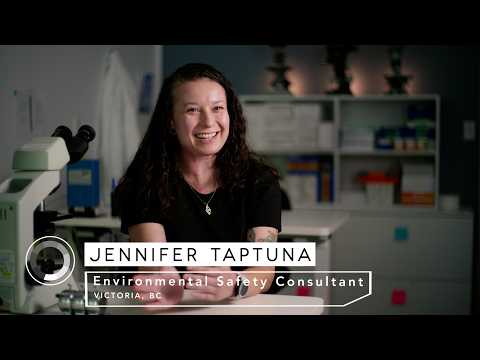
Public and environmental health and safety professionals
Career Overview
Public and environmental health and safety professionals protect and promote public health by assessing, monitoring and managing environmental public health risks. Risks they manage include toxic substances, disease outbreaks, contaminated water and more.
They help keep everyday places safe, including restaurants, public buildings and water systems. They check that sanitation, air and water quality, and the handling of hazardous substances meet government standards. When concerns come up, they investigate issues like disease risks, environmental hazards, unsafe drinking water or public complaints.
Public and environmental health and safety professionals also assess problems such as mold, chemical exposure and poor indoor air quality. They create clear community education materials on food safety, safe drinking water and emergency preparedness. Their work spans public and private sectors, and their goal is simple: reduce risks and protect community health.
Job Titles
Duties
- Inspect the sanitary conditions of restaurants, hotels, schools, hospitals and other public facilities or institutions
- Carry out surveys and monitoring programs of the natural environment to identify sources of pollution
- Monitor drinking water systems and collect samples of water for analysis, measure physical, biological, radiological and chemical workplace hazards and carry out safety and environmental inspections
- Investigate health and safety related complaints, spills of hazardous chemicals, outbreaks of diseases or poisonings
- Inspect workplaces to ensure that equipment, materials and production processes do not present environmental hazards to the environment or a health and safety hazard to employees or to the public
- Develop, put into use and evaluate public safety and environment health and safety programs and strategies
- Initiate enforcement procedures to fine or to close an establishment breaking municipal, provincial or federal regulations
- Support emergency response through risk assessments, environmental sampling and public health recommendations during wildfires, floods, chemical releases and infrastructure failures
- Provide consultation, advice, technical guidance and training to community members, employers, employees, operators, partner agencies and the public on issues of public health, environmental protection or workplace safety
- Maintain detailed documentation, prepare inspection reports and communicate findings clearly to stakeholders
Earnings
Earnings is income that workers receive in exchange for their labour. Depending on the type of employment, earnings can be in the form of wages (hourly), salaries (fixed monthly or annual) or self-employed earnings.
Work Environment
# Workers Employed
2,645% Employed Full Time
68%Work is split between field duties (inspections) and office duties typically performed in a structured environment, such as an office, hospital or school. During field work, a public and environmental health and safety professional can be exposed to various weather conditions. Depending on the location of field sites, travel by car, off-road vehicle, plane or helicopter may be required. However, the emergence of virtual inspections removes the need for field work in some cases.
Career Pathways
Entry-level graduates in this group can usually access generalist inspector positions. With training and experience, public and environmental health and safety professionals can advance toward management roles, emergency response roles and specialist roles such as water inspector, policy analyst or food inspector. Some environmental health and safety professionals pursue certification with the Board of Canadian Registered Safety Professionals (BCRSP) as part of a pivot toward occupational health. Trained public and environmental health and safety professionals can also build careers in private consulting and similar pathways.
Occupational Interests
It’s important to understand what kinds of occupations align with your interests.
For more about occupational interests visit Skills for the Future Workforce > Characteristics.
Here are the top occupational interest(s) for this career profile:


Education, Training and Skills
Roles in this group almost always require a bachelor’s degree in a relevant discipline such as food science, environmental studies, chemistry or health and safety. Courses in biology, microbiology, chemistry, toxicology, risk assessment, public communication, policy and law can also be beneficial electives.
In B.C., only bachelor’s degrees from a program accredited by the Canadian Institute of Public Health Inspectors (CIPHI) meet requirements for this group. B.C. also requires active membership in CIPHI, which requires a degree, a 12-week practicum supervised by someone who holds a Certificate in Public Health Inspection (Canada) [CPHI(C)], and passing the CIPHI certification exam, as well as meeting requirements for ongoing post-certification professional development.
Some university programs are designed to meet all CIPHI certification requirements as part of the curriculum, even incorporating the practicum. In most cases and in other provinces, however, the practicum and subsequent certification must be pursued separately as post-degree programs. Quebec maintains its own certification program for public health inspectors and environmental health officers separate from the CPHI(C).
Public and environmental health and safety professionals who trained outside of Canada and never received certification from any Canadian jurisdiction can apply for assessment and recognition of their foreign credentials via the Canadian Institute of Public Health Inspectors. Contact the Canadian Institute of Public Health Inspectors for details.
View a list of Professional Regulatory Authorities in B.C.
Education programs in B.C.

Top Skills
Every job calls for a certain set of skills. Knowing those skills is the first step in finding a good career fit.
Here, you will find the 10 most relevant workplace skills. Some are more important to achieving success in a certain career than others. These skills may come naturally to you or you may need to gain them through education, training and experience.
See the list of work-related skills below, ranked in order of importance for this career. Check out the list and see if this career matches your skills—take that first step!

Giving full attention to what other people are saying, taking time to understand the points being made, asking questions as appropriate, and not interrupting at inappropriate times.

Understanding written sentences and paragraphs in work-related documents.

Talking to others to share information effectively.

Communicating effectively in writing as appropriate for the needs of the audience.

Using logic and reasoning to identify the strengths and weaknesses of alternative solutions, conclusions or approaches to problems.

Considering the relative costs and benefits of potential actions to choose the most appropriate one.

Being able to solve novel, ill-defined problems in complex, real-world settings.

Keeping track of and assessing your performance, other individuals, or organizations to make improvements or take corrective action.

Being aware of others’ reactions and understanding why they react as they do.

Determining how a system should work and how changes in conditions, operations and the environment will affect outcomes.
Labour Market Statistics
Discover data, facts and information that have been gathered and analyzed. Learn about the characteristics of the economy and labour market in B.C.
Employment
Find out about employment types and trends by region and industry.
Employment
2,645Employment by Region

| Region | Employment | % Employment of this Occupation |
|---|---|---|
| Cariboo | 120 | 4.5% |
| Kootenay | 105 | 4.0% |
| Mainland/Southwest | 1,565 | 59.1% |
| North Coast and Nechako | 60 | 2.3% |
| Northeast | 105 | 4.0% |
| Thompson-Okanagan | 290 | 10.9% |
| Vancouver Island/Coast | 410 | 15.5% |
Labour Market Outlook
The B.C. Labour Market Outlook is a 10-year forecast of the expected supply and demand for labour in the province. It’s usually updated every year. The purpose is to provide British Columbians with the knowledge to make informed decisions on careers, skills training, education and hiring.
Forecasted Job Openings (2025-2035)
1,120Forecasted Job Openings
Forecasted Employment Growth Rate
Composition of Job Openings
Job Openings by Region (2025-2035)
| Region | Job Openings | Avg. Annual Employment Growth |
|---|---|---|
| Cariboo | 40 | 0.5% |
| Kootenay | 40 | 0.8% |
| Mainland/Southwest | 720 | 1.3% |
| North Coast and Nechako | 0 | -2.0% |
| Northeast | 30 | 0.4% |
| Thompson-Okanagan | 100 | 0.7% |
| Vancouver Island/Coast | 200 | 1.3% |
Industry Highlights
Learn about the opportunities in B.C.'s major industries, including employment trends, earning potential, locations of work and more.
Forecasted Job Openings by Industry
| Industry | Job Openings (2025-2035) |
|---|---|
| Health Care and Social Assistance | 320 |
| Public Administration | 270 |
| Professional, Scientific and Technical Services | 170 |
| Manufacturing | 60 |
| Mining and Oil and Gas Extraction | 50 |
Insights from Industry
Work in environmental public health is always changing. New technology, shifting government priorities and major events like climate change, extreme weather and pandemics are reshaping what these professionals do. The field now focuses more on emergency readiness, planning for resilient communities and quickly assessing health risks during disasters. Tools like artificial intelligence, remote sensing and digital inspection systems are changing how workers gather information, monitor conditions and make decisions. At the same time, new laws and policies mean these professionals must constantly adjust how they enforce rules and support compliance, often while dealing with more complex environmental health issues.
Remote and northern areas don’t have enough environmental public health staff. These roles are essential because they spot problems early, respond quickly to health and environmental risks and direct help to places that already have limited resources. They also play a key role in protecting isolated communities that can be cut off during natural disasters. These challenges are often even more serious in the territories of Indigenous nations.
Resources
-
BC Water & Waste Association (BCWWA) – Job Boardwww.bcwwa.org/careers/
-
Irrigation Industry Association of British Columbia (IIABC)www.irrigationbc.com/page/cross-connection-control
-
Western Canada Waterwww.wcwwa.ca
-
Board of Canadian Registered Safety Professionalsbcrsp.ca/en
-
Canadian Institute of Public Health Inspectorsciphi.ca/
-
Environmental Health Services – BC Centre for Disease Controlwww.bccdc.ca/our-services/service-areas/environmental-health-services
-
Environmental Public Health and Climate Change – Canada.cawww.canada.ca/en/public-health/services/health-promotion/environmental-public-health-climate-change.html
-
Environmental and Workplace Health – Canada.cawww.canada.ca/en/health-canada/services/environmental-workplace-health.html
-
Occupational Health and Safety – Province of British Columbiawww2.gov.bc.ca/gov/content/employment-business/employers/employers-advisers-office/ohs
-
Workplace Inspections – WorkSafe BCwww.worksafebc.com/en/health-safety/create-manage/workplace-inspections